
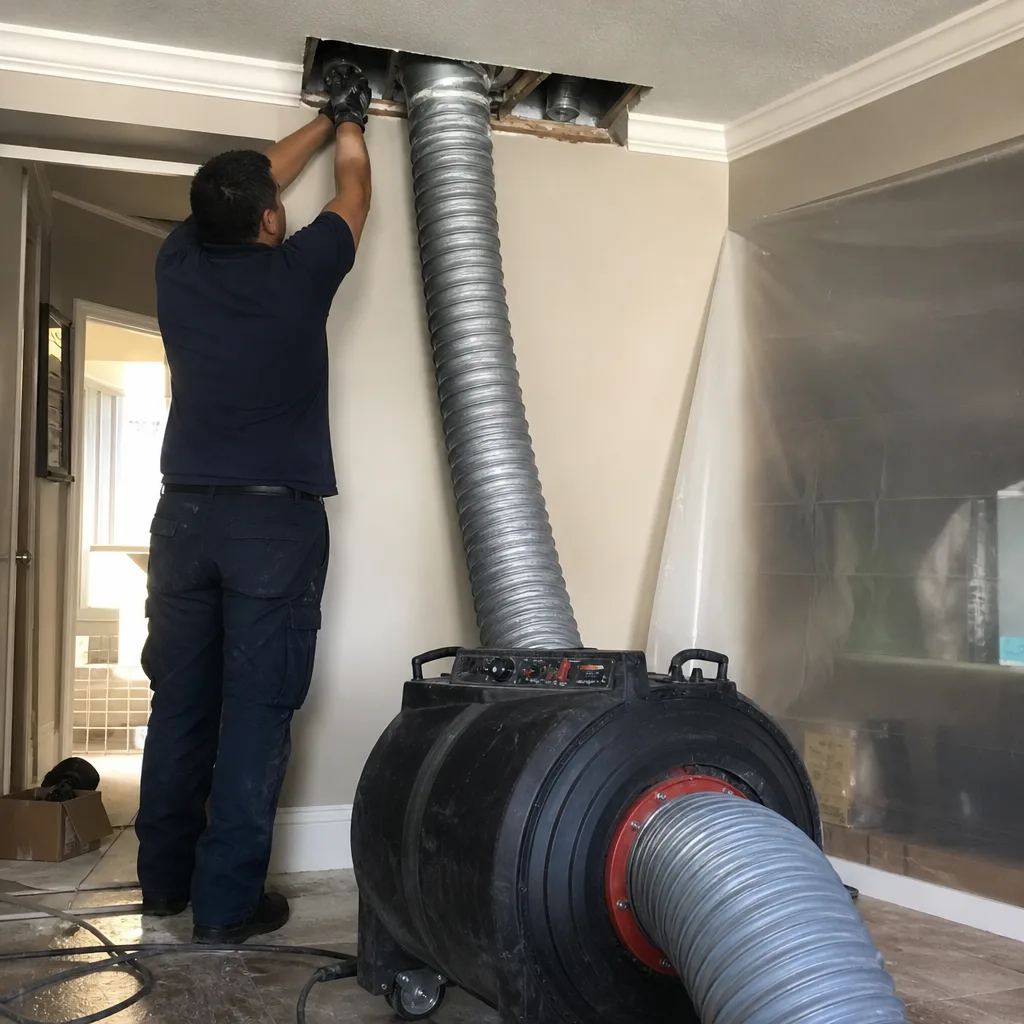
Last updated November 14, 2026
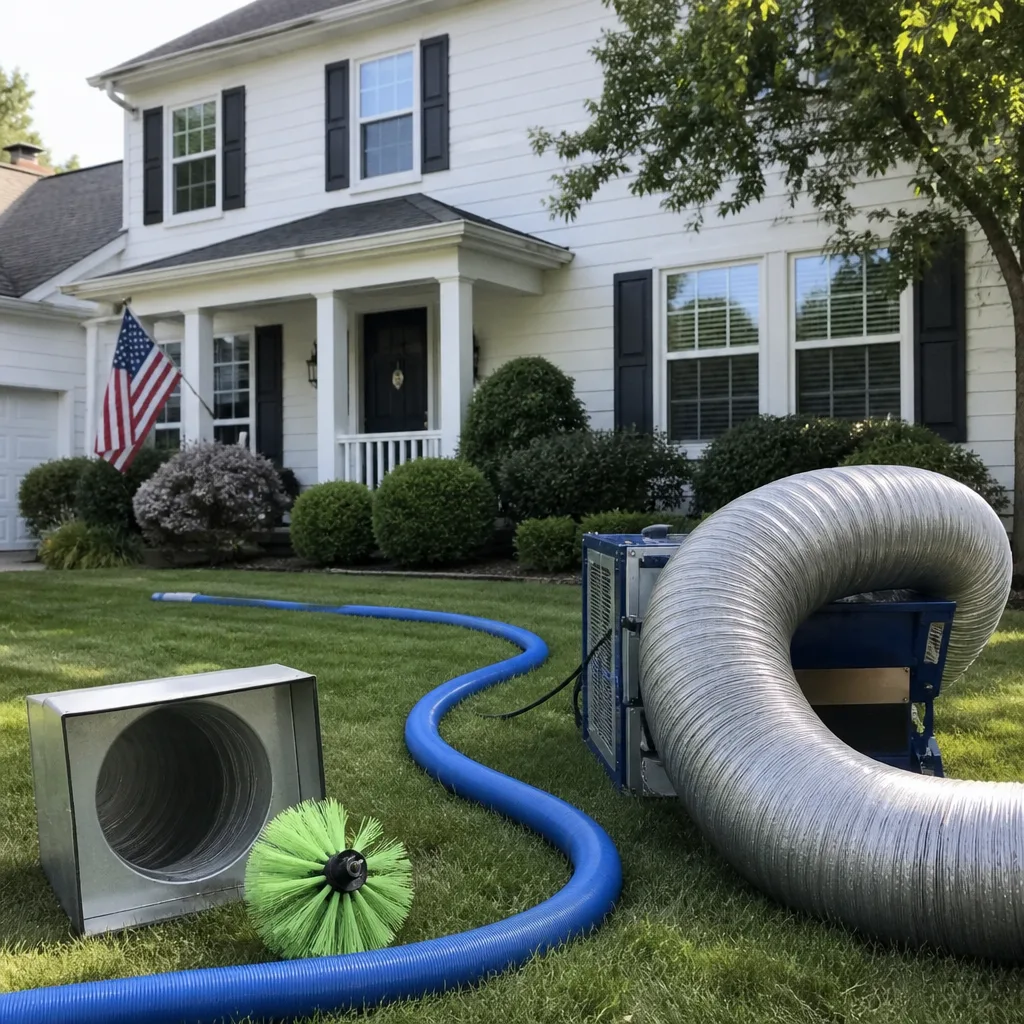 Whole-home duct cleaning
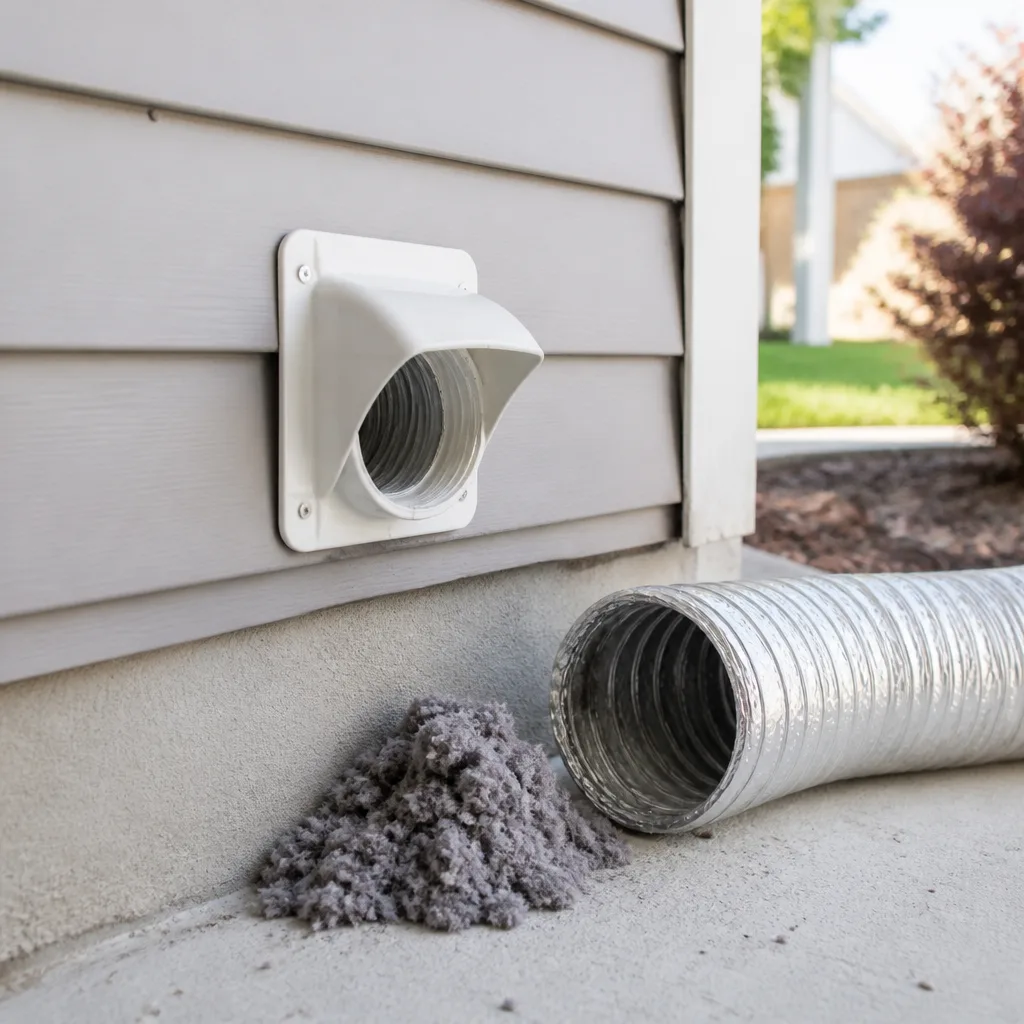 Dryer vent cleaning
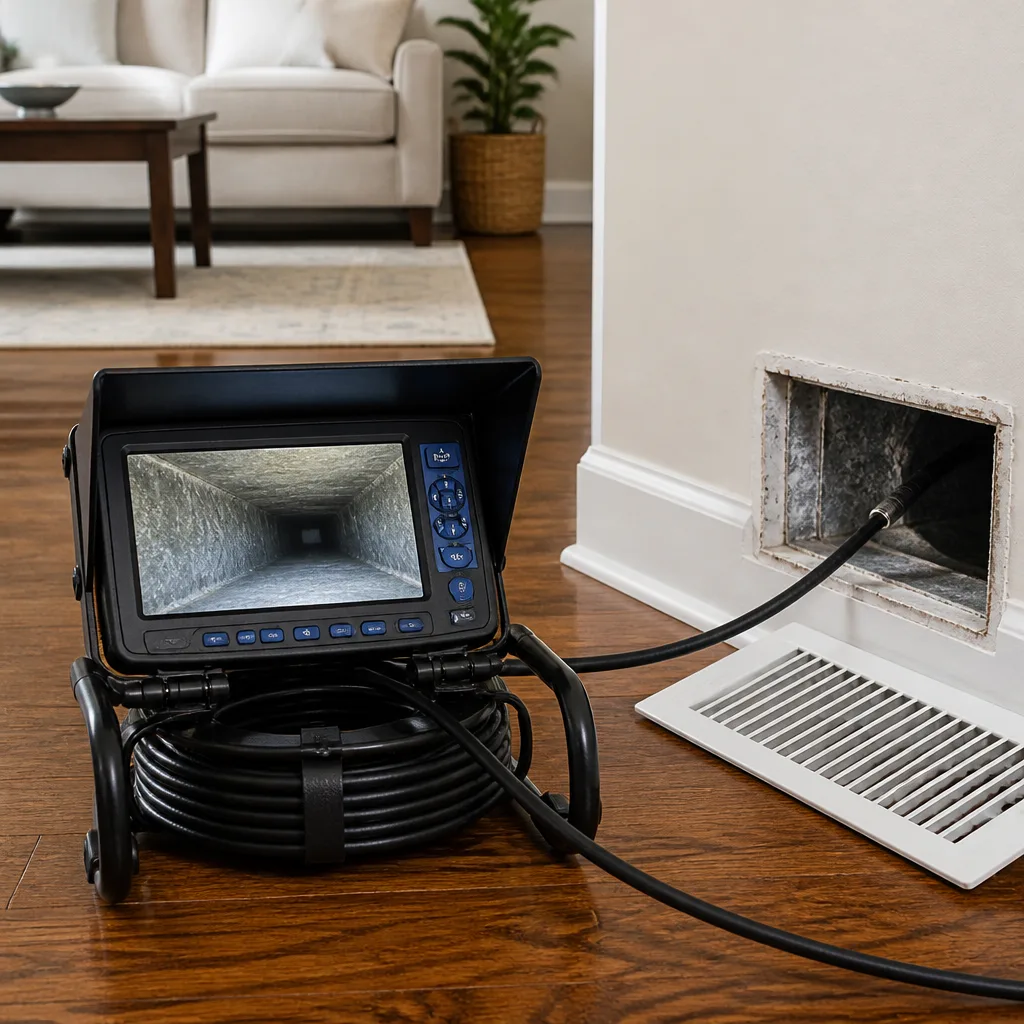 Camera inspection
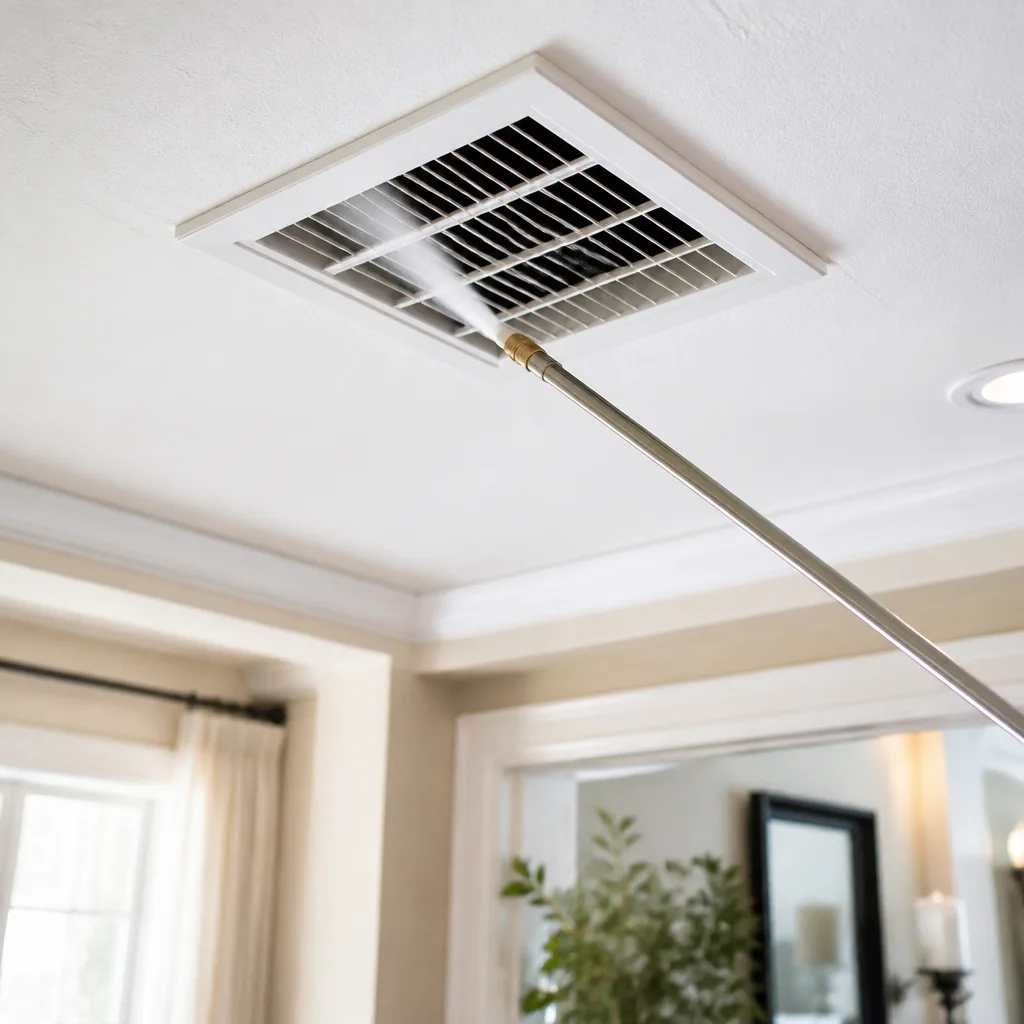 Sanitizing & deodorizing
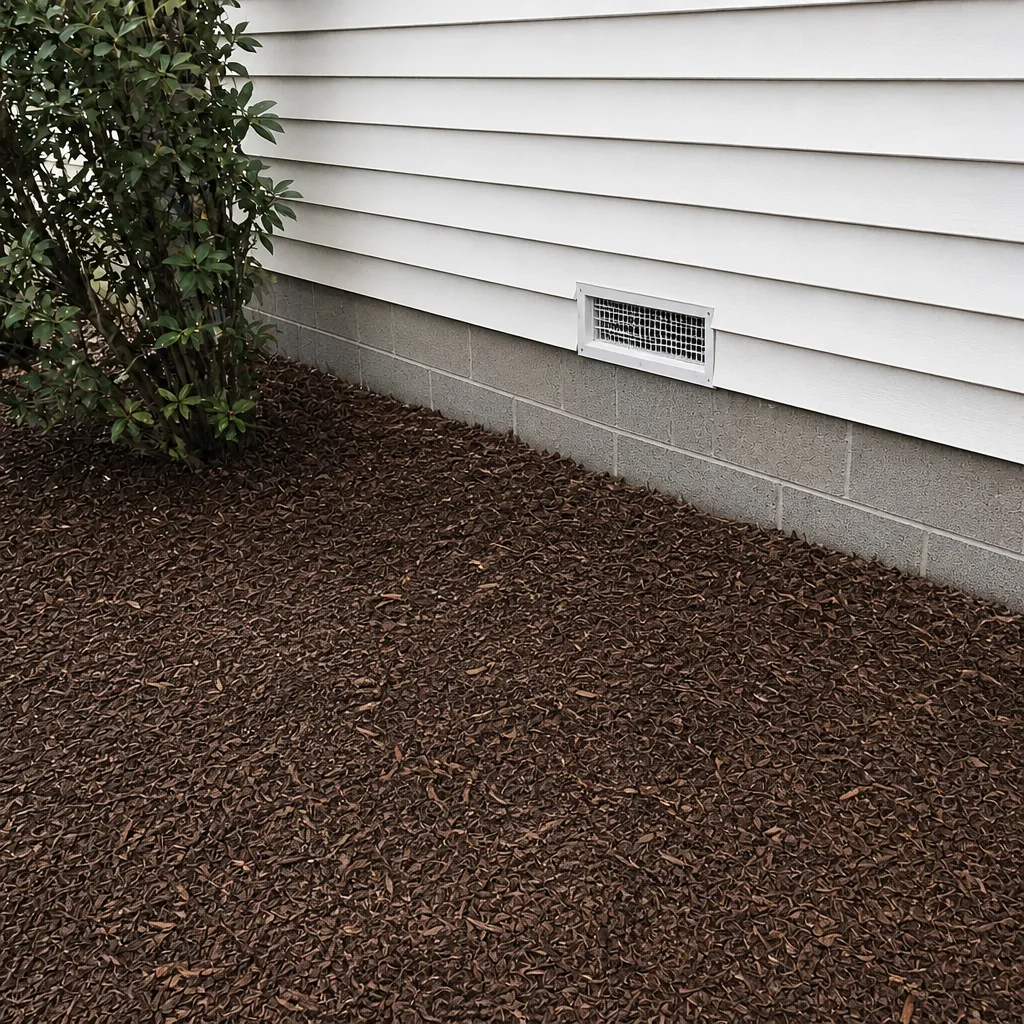
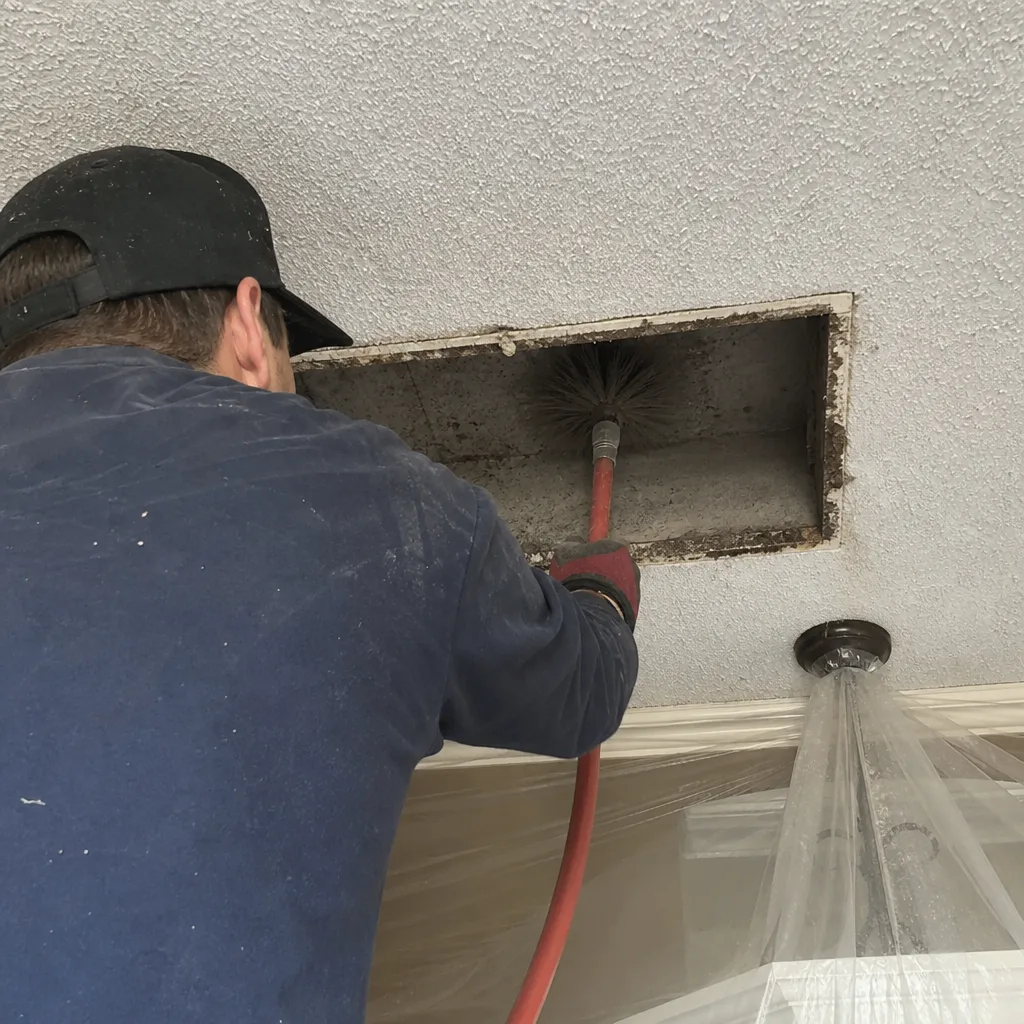
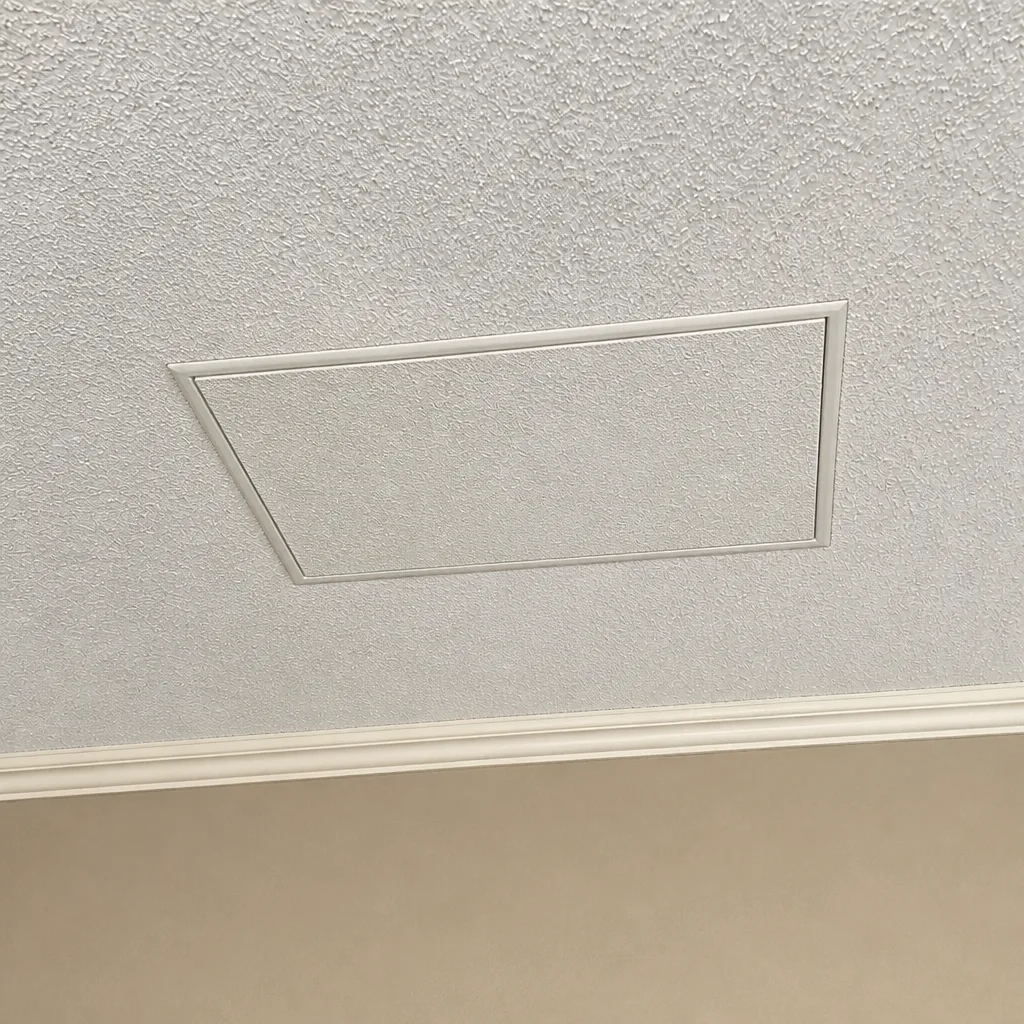
Whole-system duct and dryer vent check with before-and-after photos - you see exactly what came out of your vents
That "$99 whole-house special" is a bait ad - the real number appears once they are in your hallway, or the "clean" is a shop-vac at the register. We photograph the inside of your ducts before and after instead.
Air Duct Cleaning Maintenance Checklist for Concord Homeowners
The advice to clean your ducts every three to five years wasn’t derived from duct science. It was a marketing compromise, a number vague enough to apply to every house in every climate and easy enough to remember that it spread. Follow it blindly and you’ll either pay to clean a system that was never dirty or wait years past the point where buildup actually started affecting your air. This guide replaces that number with a system: a short monthly check, a filter log, an annual record of what your ducts look like, and a clear line between what you can handle and what needs professional equipment. Every piece of it is built for how homes here actually run. Concord summers push your system hard, pollen season runs long, and new construction dust is everywhere.
Quick Answer
Clean your air ducts when your own observations say the system needs it, not on a fixed calendar. A monthly register check with a flashlight and a white cloth catches most problems early. Pair that with a filter log and annual photos, then bring in professional cleaning when the cloth comes back gray on every register, when you see visible debris inside the plenum, or after a renovation or a move-in. In Concord, most homes land somewhere between a full professional cleaning every five to seven years or on a trigger event, which is a more honest range than the standard three-year rule.
Styles & brands we work with
- Whole-home duct cleaning
- Dryer vent cleaning
- Camera inspection
- Sanitizing & deodorizing
Table of Contents
- Your Ten-Minute Monthly Register Inspection
- The Concord Triggers That Move Your Schedule Up
- Keeping a Filter Log (and Why It Matters)
- The Annual Photo Record That Changes Everything
- Three Tasks You Can Do, Two You Shouldn’t
- The Dryer Vent Belongs on the Same Checklist
- Property Managers: A Multi-Unit Version
- When to Call a Professional
Your Ten-Minute Monthly Register Inspection
Start with a flashlight, a white cotton cloth, and a walk through the house that takes under ten minutes. Pop off a supply register, hold the cloth flat in the airstream for a few seconds, and look at what the cloth shows. Repeat at two or three registers and one return grille. That single test tells you more about the state of your system than any general advice ever will.
Here’s the sequence we recommend, in order:
- Flashlight into every supply register. Look for dust accumulation, any visible fuzz, debris, pest evidence, or moisture. Note anything like dark staining near the boot.
- White cloth drag test. A faint light gray film is normal dust from the airstream. A heavier coat, dark gray or black debris, or anything that leaves streaking lines tells you the duct surface itself is loaded.
- Return grille check. Returns collect more than supplies because they carry the bulk of the air. Remove the grille and look behind it for pooling dust. A visible mat of dust there is early-stage buildup.
- Airflow feel. Hold your hand a few inches in front of a supply register. If it feels noticeably weaker than it did a month ago, that’s a restriction sign worth noting.
- Sniff and listen. A musty or dusty smell when the system starts, or a rattle in a duct run, both belong on this list. Neither alone means you need cleaning. Recurring over weeks, they do.
Write the date and what you saw on a sheet taped inside the air handler closet door. The goal isn’t a clean-looking notebook. It’s a baseline. In Concord, where a system often runs for months of humid summer weather and again during a cold snap in January, that baseline carries you through a full seasonal cycle. Without it, you’re guessing.
The Concord Triggers That Move Your Schedule Up
A fixed timeline ignores the three things that actually control how fast your ducts collect contamination: how many hours your system runs, what’s floating in the outdoor air, and what’s been happening inside the house. Concord sets its own pace on all three.
HVAC runtime hours
A system that runs at high load through a long Piedmont summer moves far more air, and more dust, through the ducts than one in a milder climate. A household that keeps the thermostat conservative runs the fan more than one that leans on it less, and the accumulation follows the runtime almost directly. If your system runs almost continuously across June, July, August and September, assume a shorter cleaning interval than the national rule of thumb implies.
Pollen season
Late winter into spring, Concord’s tree pollen can be intense, and the filters on your air handler hold the line only to a point. Pollen that makes it past the filter settles on duct surfaces. Every open window during high-pollen weeks shortens that filter’s practical lifespan and adds to the load on the system. If you know you keep the windows open through pollen season, plan on a filter change soon after.
Renovation and construction work
Any drywall sanding, cabinet replacement, flooring tear-out, or drywall patch-and-paint job sends fine dust through the house. Some of it reaches the ducts even when the crew takes precautions. If you’ve had work done and you haven’t sealed the registers, or the crew didn’t, that’s a genuine trigger. Call it a one-time cleaning shot, not a normal interval.
Lifestyle and household factors
Pets shed continuously, and their dander and hair make their way into returns over time. Someone in the house with allergies or asthma, or a newborn, raises the bar for what “clean enough” means. Any water intrusion or a burst pipe that affected a duct run should trigger professional inspection, not just cleaning, because moisture inside a duct can mean a compromised system. In a Concord home built decades ago with the original ductwork, understand that the sheet metal and flex runs may not have been cleaned since the build. Age alone isn’t a trigger, but original-era ductwork is almost always a reasonable candidate for a first professional cleaning.
Keeping a Filter Log (and Why It Matters)
The filter is your duct system’s only barrier. A log of filter changes and what the filter looked like when you pulled it is the single best long-term signal for whether your ducts are deteriorating or holding steady. The log turns filter replacement into duct diagnostics.
What to record each time you swap one:
- The date and the estimated number of days since the last change.
- The filter rating (what number is actually printed on the frame) and the size listed on the package.
- How loaded the filter looked on a scale of your own choosing: light, medium, or heavy.
- Whether the color was uniform or uneven. An uneven pattern with one side noticeably darker can mean a leak or a cross-connected return.
- Any pet hair, visible dust matting, or material you find clinging to the surface.
Once you have three or four log entries, patterns emerge. If your filters consistently load in half the expected interval, the system is moving more dust than it should, which could be a leak, a hole in a flex run, or a return that’s drawing from a crawlspace. If filters load unevenly, you’ve found a flow problem. Those are the cases where a professional inspection of the ducts themselves, rather than another filter swap, is the right move.
One caution: don’t chase the highest filter rating you can find. A filter that’s too restrictive for a residential system pushes back against airflow, and that stress can show up as weak supply registers and longer runtimes. A standard filter rated appropriately for your system, changed on a consistent schedule, protects your ducts better than an expensive filter run past its loading point.
The Annual Photo Record That Changes Everything
Memory is a poor baseline. Nobody remembers exactly how much dust there was in a specific register a year ago, and that vagueness is how an owner ends up either cleaning too early or waiting too long. Time your annual photo record for the same month each year, ideally after the summer cooling season. The photos themselves build your case.
What to photograph and why:
- Inside each supply register, flashlight held steady, phone camera up close. Same framing each year.
- Inside the return plenum through the grille opening, if you can reach it safely.
- A labeled close-up of the filter when you pull it, showing loading pattern.
- The air handler and the duct connection at the unit, showing the gasket and the seam.
- Any spot that looked suspicious the previous year, matched to the same framing.
Save the photos in a folder by year. When you look at two years side by side, you’ll see one of two things. Gradual change, where the buildup increases a bit each year in a predictable way, is normal and tells you the system is stable. A sudden jump, where a clean register looks heavily dusted in twelve months, is a contamination event, and it points to something specific: a mechanical change, a leak, or a renovation that wasn’t contained. That’s the difference between “we’ll get to it” and “we should look at this now.” A professional using air duct cleaning equipment will take before-and-after photos for you, which becomes a useful reference for the following year.
Three Tasks You Can Do, Two You Shouldn’t
The line between homeowner work and professional work is defined by what tool the job requires. If it can be done with a screwdriver, a vacuum with a crevice tool, and a rag, it’s yours. If it needs a rotary brush, high-pressure air whip, and a containment vacuum that can hold negative pressure in a sealed system, it isn’t.
Three tasks for you
- Gasket and seal checks. At every register, and at the air handler where the duct connects to the unit, look at the foam gasket or metal-to-metal seam. A perished, torn, or missing gasket lets unconditioned air and dust into the system. A five-dollar piece of self-adhesive foam gasket, replaced carefully, closes that gap safely.
- Register and grille cleaning. Remove each supply register and the return grille, wash them in a utility sink with mild soap, dry them fully, and reinstall. This removes the visible surface dust that never actually got into the ducts. It also gives you a clean look inside the boot.
- Return grille vacuuming. With a crevice tool and an upholstery brush on a household vacuum, run over the return grille itself and the accessible surface behind it. This is a surface task, not a duct-cleaning task, so don’t try to reach deeper by removing duct sections.
Two tasks we strongly advise against
Reaching into the duct runs with a shop vac or homemade brush. Flexible ductwork is easily damaged. A rotary brush is a purpose-built tool that spins at controlled pressure and doesn’t tear the liner; a shop vac hose, jammed in and dragged, will. Once a flex duct liner is torn, it can’t be repaired properly without replacement, and a hole in a duct run in a Concord attic or crawlspace costs more to fix than the cleaning would have.
Working on the air handler beyond the filter. The blower assembly, the coil, and the electrical connections inside the air handler are not a homeowner task. If you can’t see something there, don’t guess. Call a professional who’s set up for it, in a scope we’re clear about (we clean ducts, we don’t service the HVAC unit itself, and if the problem is inside the unit that’s a call to a qualified HVAC technician).
The professional tools are the part that actually removes the contamination. A duct cleaning in Concord job done properly uses a rotary brush system like the Rotobrush, connected to a high-capacity vacuum, plus air whips and containment equipment, all run under negative pressure so the dust leaves the house rather than settling into your living room. That’s what commercial-grade equipment brought to your home looks like, and it’s the reason a proper cleaning isn’t the same job as a thorough surface pass.
The Dryer Vent Belongs on the Same Checklist
Homeowners treat the dryer vent as a separate appliance issue. It isn’t. It’s a duct, often the most compromised one in the house, and one of the leading causes of residential house fires when lint builds up in it. Adding a dryer vent check to your monthly register walk costs about thirty seconds.
What to look for:
- Dryer times lengthening. If loads that used to finish in one cycle now take two, the vent is restricting airflow.
- The exterior vent hood barely moving when the dryer is running. A strong, steady flap movement is right. A weak flutter or nothing is a warning sign.
- The back of the dryer feeling unusually hot to the touch, or the laundry room getting noticeably warmer when the dryer runs.
- Lint visible around the outside of the vent hood or collecting behind the dryer.
- Any crush or kink in the vent line, especially the flexible section behind the dryer.
dryer vent cleaning is offered as a standalone safety service, and it’s worth treating it that way: not a bonus add-on to a duct cleaning, but its own safety item with its own schedule. The frequency that fits a household depends on how much laundry runs through it and how long and how routed the vent is. A short, straight, rigid-metal vent tolerates more use before cleaning; a long, flexible, or elbow-heavy run needs it sooner. When in doubt, get it checked.
Property Managers: A Multi-Unit Version
Running the same logic across multiple units means the individual owner’s system has to become a shared one. The monthly check becomes a maintenance item in the property file, and the annual photo record becomes documentation you can pull out when a tenant raises an air quality complaint or a liability question lands on your desk.
A workable approach for a small portfolio:
- Assign one person to do the monthly register walk per unit and log the results in a shared file, not on a clipboard in a utility closet.
- Keep a filter-change log per unit, with dates and ratings, so you can compare across units and spot the ones that are loading faster than the rest.
- Photograph each unit’s registers and filter loading annually, labeled by unit number, and save the set by year.
- Group the actual professional cleanings by building or by block where routes allow, so inspections and cleanings happen together and the schedule stays consistent.
For light-commercial and multi-unit work, we bring Abatement Technologies containment equipment, which lets us hold negative pressure and filter the exhaust in a system that’s heavily soiled or adjacent to a remediation scope. That matters more in a multi-unit building where cross-contamination between units is a real risk. Understanding how ducts integrate with a whole-home air quality setup, whether it’s a Honeywell or Aprilaire controller running the filtration, is part of the job. If your building runs one of those systems, our technicians know how the duct cleaning fits around it rather than treating it as a separate world. For more detail on our scope in the area, see the Concord service information.
When to Call a Professional
Bring in professional equipment when your own observations cross a clear line, not when a marketing calendar says so. The triggers are specific and easy to name:
- The cloth drag test comes back dark on multiple registers, not just light gray.
- You can see a mat of dust behind a return grille.
- Your filter log shows filters loading in half the expected interval, repeatedly.
- Your annual photos show a sudden jump, not gradual change.
- You’ve had a renovation, a move-in, or a water event.
- Your dryer vent shows two or more of the warning signs above.
- You’re a landlord documenting air quality for tenants.
Duct Cleaning Concord offers free estimates in Concord. Call (888) 687-3361. We answer 24/7. Fast dispatch from 7am to 7pm, Sunday through Friday. When we arrive, we’ll walk the system with you, show you what we see, and give a written estimate before any work starts.
See the difference
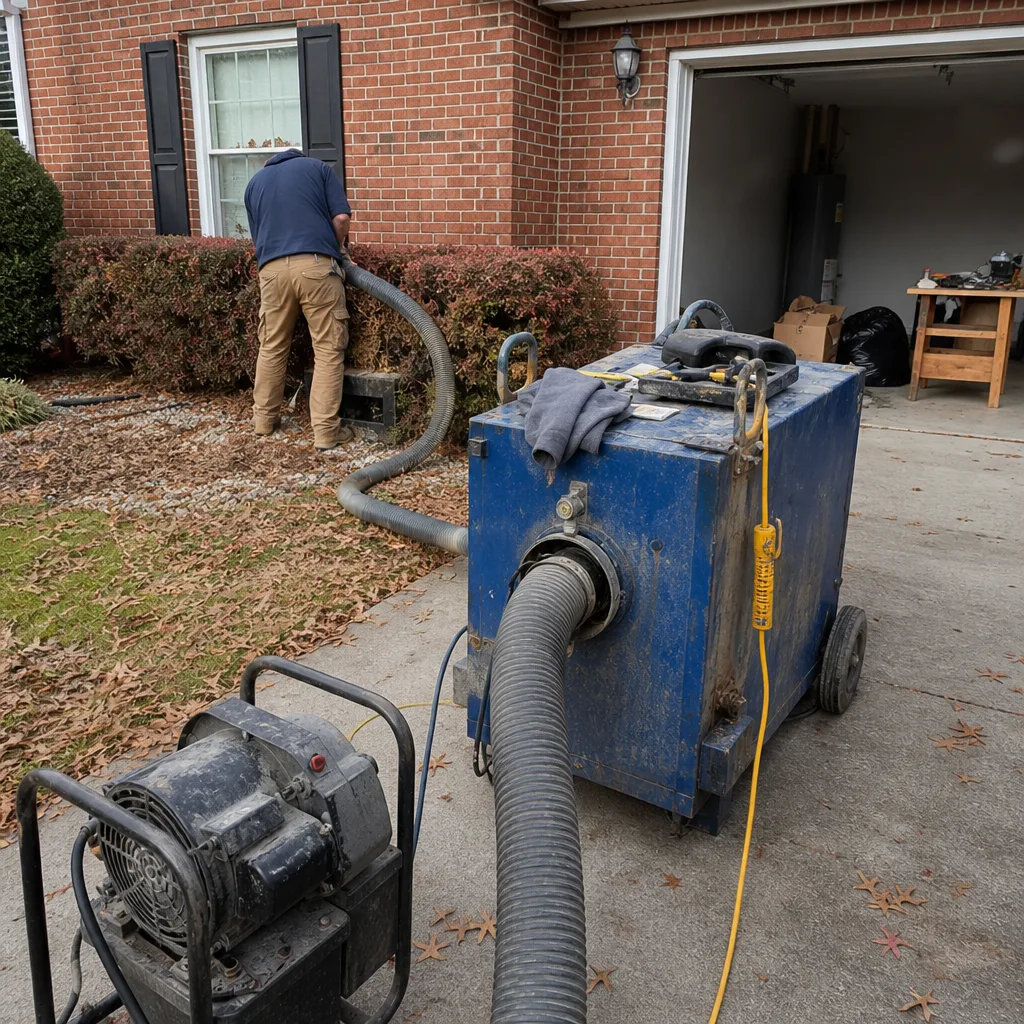 Before
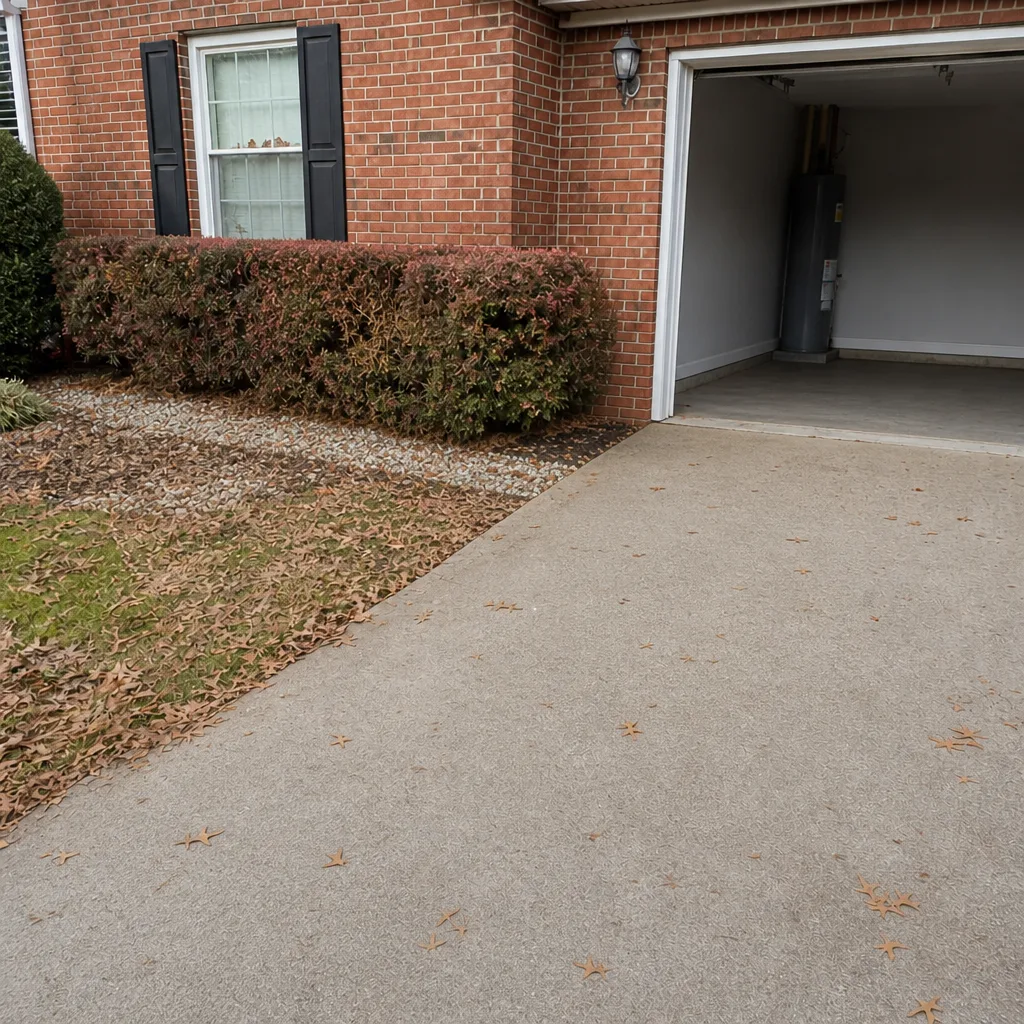 After
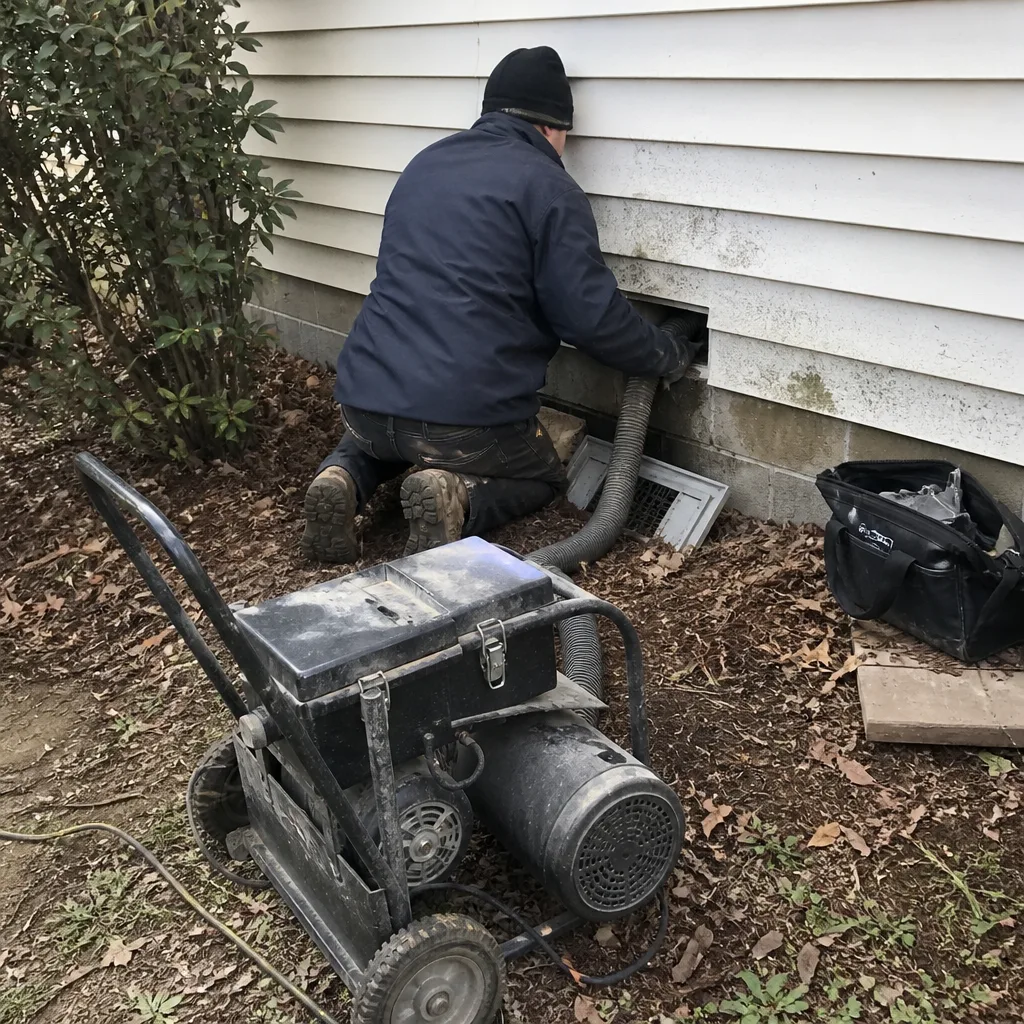 Before
 After
 Before
 After
Common Mistakes to Avoid
- Following the three-year rule as gospel. It’s a compromise number, not a measurement, and every home in Concord runs on its own clock. Your own log is a better indicator than any rule of thumb.
- Skipping the filter log. Without a record, you can’t tell a filter that’s loading fast from one that’s loading at a normal pace. A month of scribbled dates costs nothing and gives you the baseline.
- Never photographing anything. Memory is not an inspection record. Without photos taken the same month each year, you can’t distinguish gradual buildup from a contamination event, and you’ll either clean too early or wait too long.
- Letting the filter rating creep up. A higher-MERV filter isn’t automatically better if your system isn’t designed for it. Running a restrictive filter makes the blower work harder and reduces register airflow, and that’s a new problem, not a solution.
- Treating the dryer vent as the dryer’s problem. It’s a duct, it’s a fire risk, and it needs its own inspection. If you’ve never had it cleaned in a house you’ve lived in for years, that’s the one call worth making soon.
- Tackling duct cleanup with a shop vac. A household vacuum won’t hold dust under negative pressure, and dragging a hose through flexible ductwork can tear the liner. It’s the wrong tool for the job.
- Hiring the cheapest per-vent quote. The quote you compare is the whole system, not the register count. A price built on a low per-vent number often becomes a bigger invoice once the truck is at your house. Ask for a flat price per system, agreed before work starts.
Frequently Asked Questions
For most Concord homes, a professional cleaning every five to seven years, or on a specific trigger event like a renovation or a move-in, matches what the system actually needs. The standard three-to-five-year advice you’ll find everywhere is a rough average, not a real measurement. Your own register checks, filter log, and annual photos give you a better answer than any general rule. Call (888) 687-3361 for a free estimate and we’ll walk you through the triggers that apply to your situation.
We don’t quote duct cleaning from a phone script or a per-vent price. The price depends on the number of supply and return runs, the length and accessibility of the ductwork, whether any runs are flex or rigid, and how heavily soiled the system is. We set one flat price per system, agree it in a written estimate before any work starts, and that’s the number on the invoice. Call (888) 687-3361 for a free estimate.
Low quotes tend to be built on a per-vent price that doesn’t reflect the actual job. A cheaper number often means a smaller truck, a shop-vac-style vacuum, no containment, and a per-register count that leaves the trunk lines and plenum largely untouched. The real work is cleaning the whole system, not just the visible registers. Ask any provider what equipment they use and whether they hold negative pressure during the job; if they can’t answer, the quote isn’t comparable. Call (888) 687-3361 for a free estimate that reflects the actual scope.
Ask for before-and-after photos of your own ducts, not a stock photo. A full-scope cleaning includes a look inside the system before and after, and the photos should show the registers, the return plenum, and the connection at the air handler. We take those photos as part of the job. Call (888) 687-3361 for a free estimate and we’ll explain the process.
Not safely, and not thoroughly. A household vacuum doesn’t hold negative pressure in a sealed duct system, so dust ends up in the room rather than leaving the house. Dragging a shop vac hose through a flexible duct liner risks tearing it, and a torn liner is a repair, not a cleaning. The right tool is a purpose-built rotary brush system connected to a high-capacity containment vacuum. For a free estimate on a proper cleaning, call (888) 687-3361.
It’s better if you’re there at the start so we can walk the system with you and confirm the scope before we begin. Once the work is underway, you don’t need to stay; we’ll leave the before-and-after photos for you. Call (888) 687-3361. We answer 24/7. Fast dispatch from 7am to 7pm, Sunday through Friday. We’re closed on Saturday.
The Bottom Line
A duct cleaning checklist isn’t a to-do list you hand off. It’s a monitoring system you own. A ten-minute monthly register check with a flashlight and a white cloth, a filter log with dates and loading notes, and annual photos taken the same month each year together tell you when the ducts actually need professional attention. In Concord, let your HVAC runtime hours, pollen season, and any renovation work move your schedule rather than a fixed calendar. Do the three homeowner tasks (gaskets, registers, return grille vacuuming) and leave duct cleaning and air handler work to professional equipment. When the triggers say it’s time, call for a free estimate, get one flat price per system in writing, and ask for before-and-after photos of your own ducts.
Duct Cleaning Concord handles air duct cleaning, dryer vent cleaning, and air duct repair as our core work, using Rotobrush and Nikro equipment with Abatement Technologies containment where the job calls for it. Call (888) 687-3361 for a free estimate. We answer 24/7. Fast dispatch from 7am to 7pm, Sunday through Friday.
Written by the team at Duct Cleaning Concord, serving Concord since 2013.