
Last updated November 14, 2026
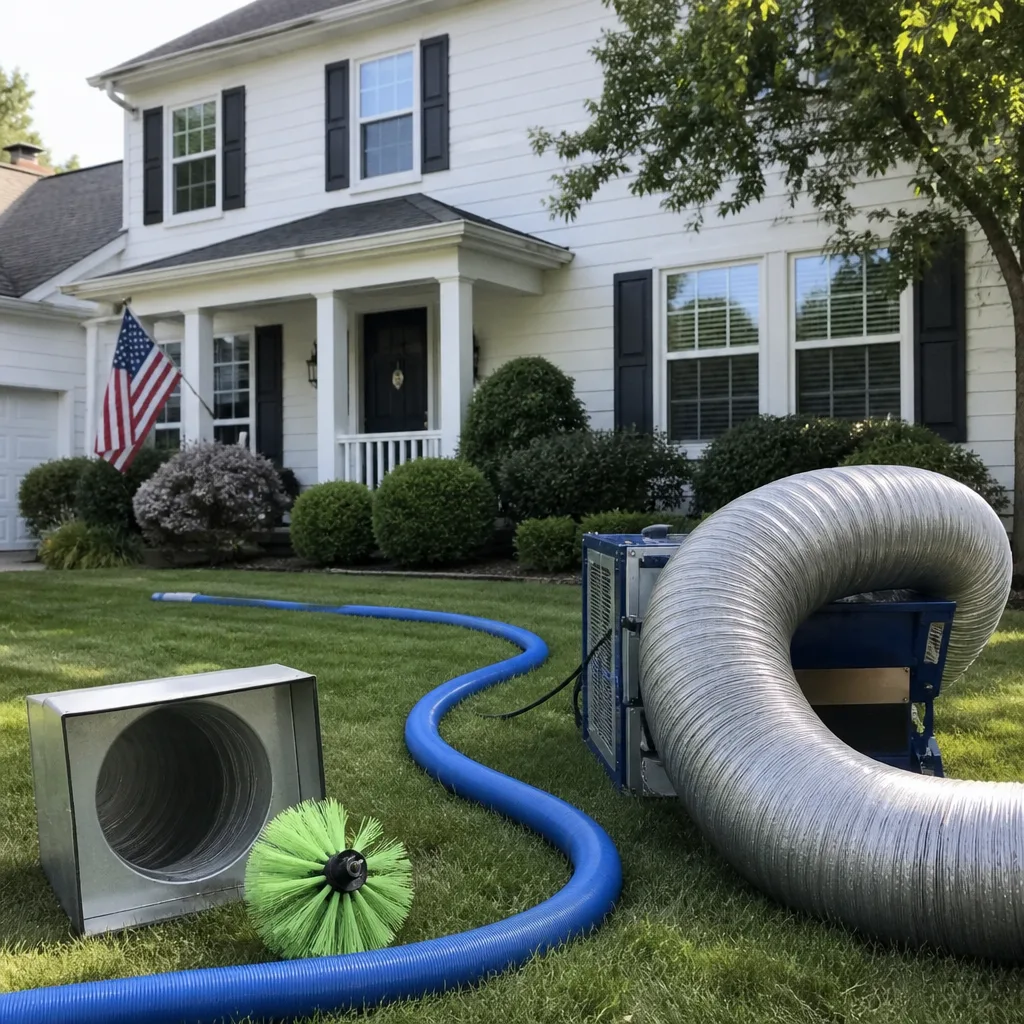 Whole-home duct cleaning
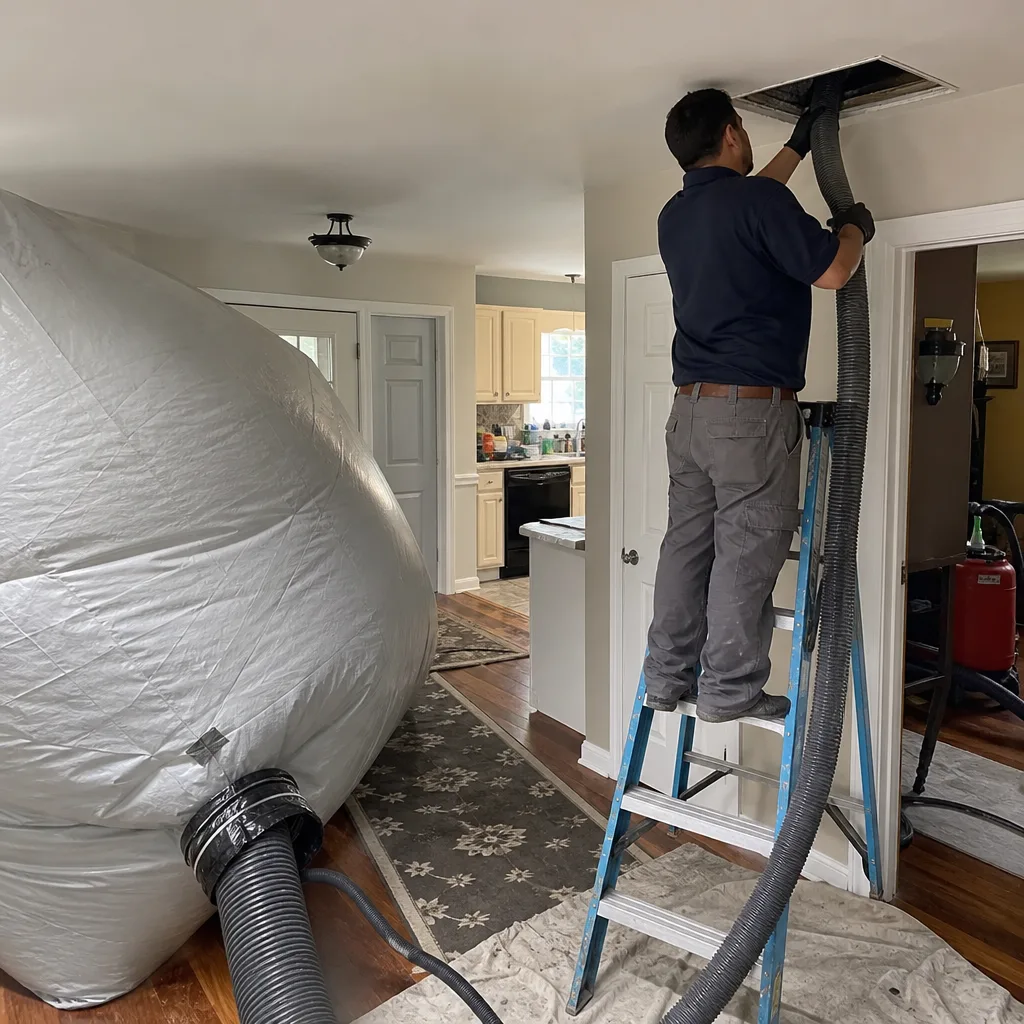
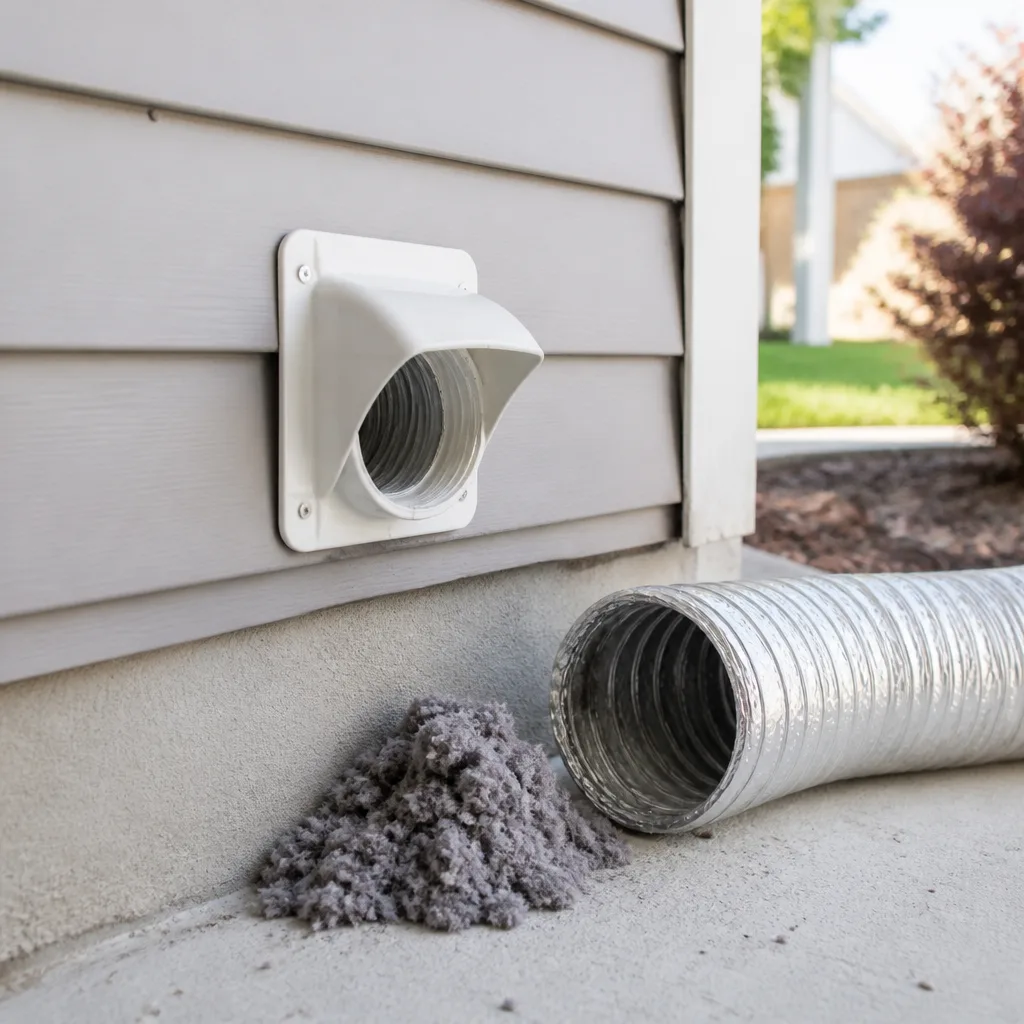 Dryer vent cleaning
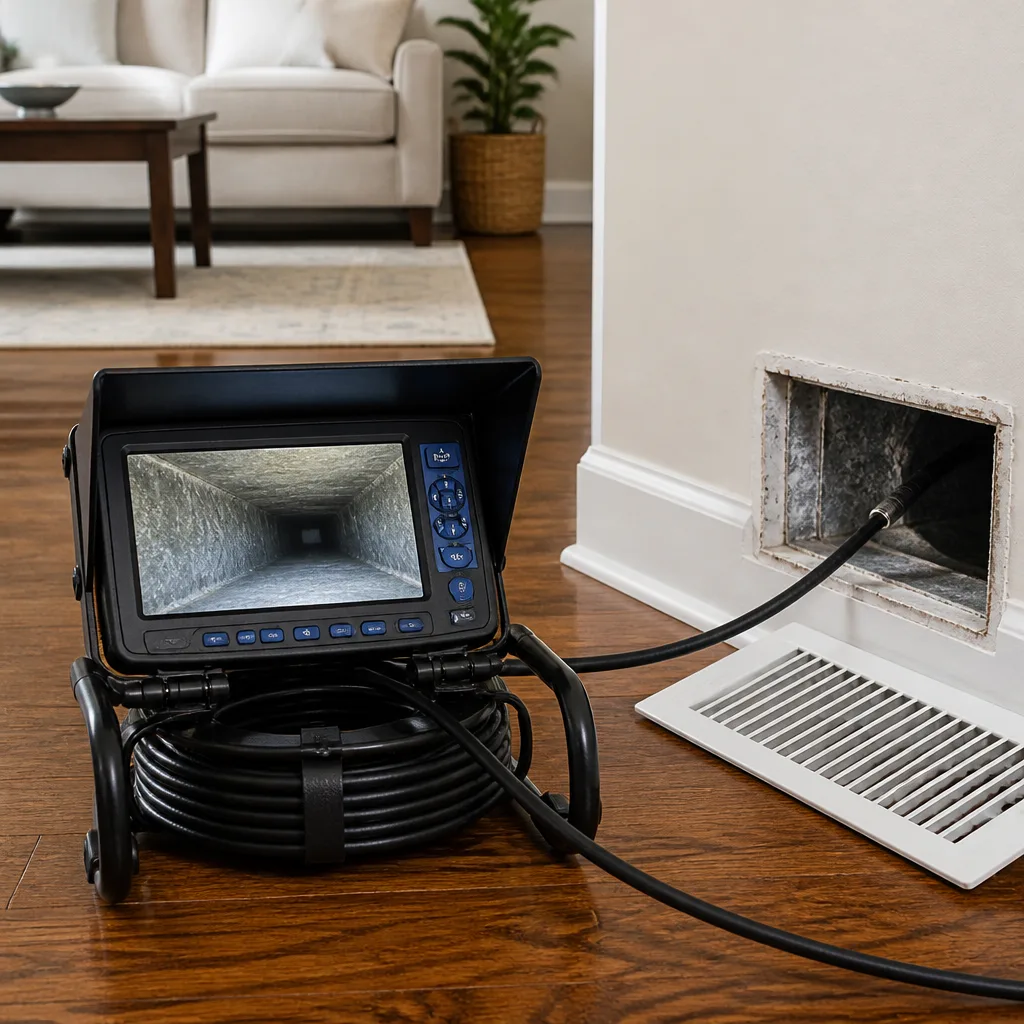 Camera inspection
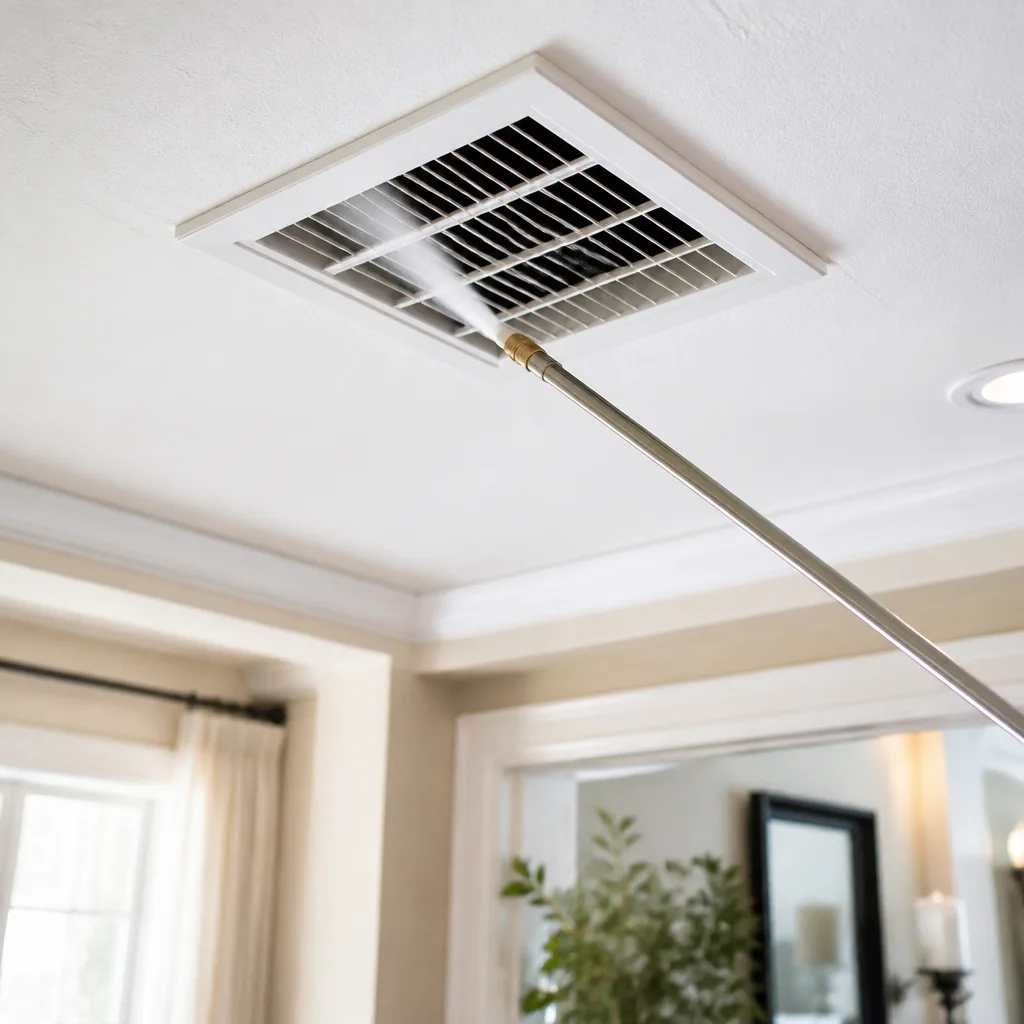 Sanitizing & deodorizing
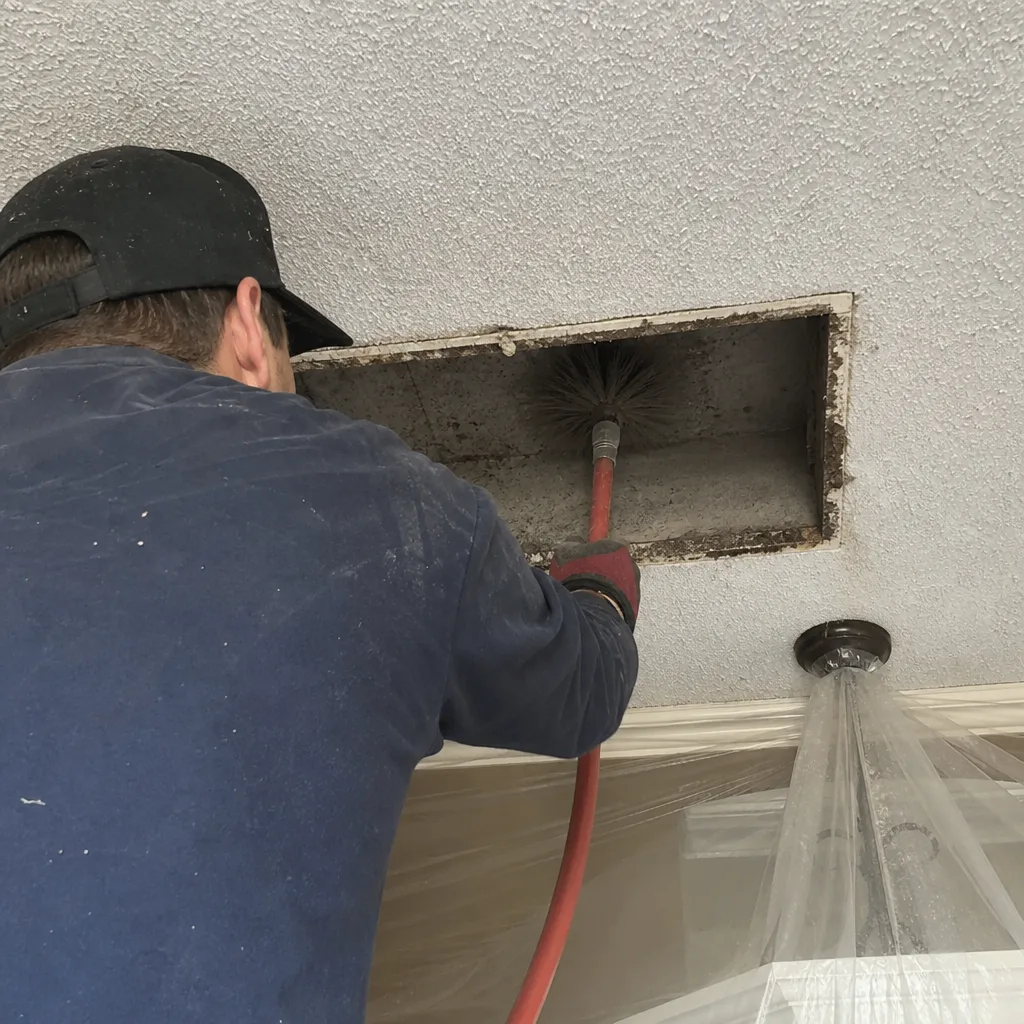
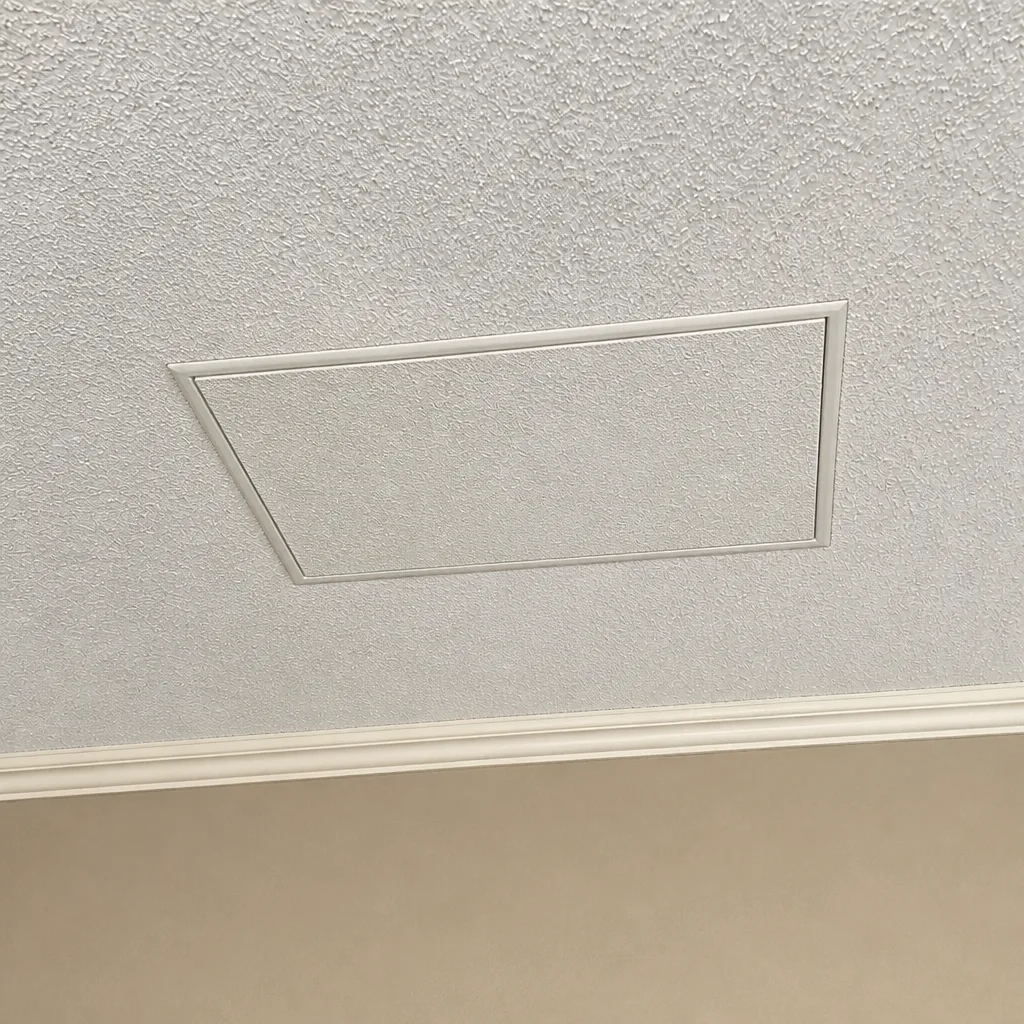
Whole-system duct and dryer vent check with before-and-after photos - you see exactly what came out of your vents
That "$99 whole-house special" is a bait ad - the real number appears once they are in your hallway, or the "clean" is a shop-vac at the register. We photograph the inside of your ducts before and after instead.
Air Duct Cleaning Permits, Codes & Inspections in Concord, NC: What You Need to Know
Here’s the part almost nobody tells you: the cleaning itself is the least regulated part of the job. If your duct company applies an EPA-registered encapsulant to the inside of your ductwork without disclosing it, they may have just performed a pesticide application in your home, and in North Carolina that’s a category regulated separately from HVAC work. Most homeowners assume duct cleaning sits in a gray zone where nothing is written down. The truth is more interesting: the line moves depending on what the technician actually does once the access panel comes off. In this guide we’ll draw that line clearly for Concord homeowners, covering what needs a permit, what North Carolina says about antimicrobials and sealants, when mold in ducts changes the rules, and what to do if a job goes wrong.
Quick Answer
Cleaning air ducts in Concord, NC generally does not require a permit. Mechanical permits and inspections come into play when a job crosses into actual modification: cutting into or replacing rigid duct sections, opening a sealed plenum, changing the system’s layout, or applying an antimicrobial coating or sealant inside the ductwork. Antimicrobial and sealant products must be EPA-registered and used according to their label, and any duct modification tied to a permitted HVAC replacement has to be documented and inspected through Cabarrus County. If you’re selling a Concord home, that documentation matters.
Styles & brands we work with
- Whole-home duct cleaning
- Dryer vent cleaning
- Camera inspection
- Sanitizing & deodorizing
Table of Contents
- Cleaning vs. Repair: Where the Permit Line Falls in Concord
- Antimicrobials and Sealants: North Carolina’s Separate Rulebook
- When Mold in Your Ducts Changes the Rules
- Duct Work Tied to a Permitted HVAC Replacement
- What a Cabarrus County Inspection Actually Looks At
- If a Duct Cleaning Company Damages Your System
- Permits, Codes and Property Managers
- Questions That Reveal Whether a Company Knows the Rules
Cleaning vs. Repair: Where the Permit Line Falls in Concord
Standard air duct cleaning is a maintenance activity and doesn’t require a permit in Concord or anywhere else in Cabarrus County. A technician opens access points, runs rotary brush and vacuum equipment through the duct runs, clears the plenum and returns, and closes everything back up. No structural change, no permit.
The moment the work changes the system’s physical configuration, you’re in a different category. Here’s the practical breakdown:
- Cleaning and vacuuming existing ducts: no permit. Maintenance scope.
- Cutting new access holes and sealing them afterward: usually no permit, since the duct system’s integrity is restored with approved tape and mastic. Ask how they’ll close the holes.
- Replacing a damaged section of rigid duct: likely requires a mechanical permit. This is a modification to the system.
- Rerouting ductwork to serve a new room or improve airflow: requires a mechanical permit. Layout changes are permit-required work.
- Opening a sealed plenum or making a connection to the air handler cabinet: the boundary is delicate. Sometimes it’s clean-out work, sometimes it’s a modification. A reputable company will tell you which they’re doing and why.
- Applying antimicrobial coatings or sealants inside the duct system: a separate regulatory category covered below.
- Replacing flex duct runs with rigid duct for performance: mechanical permit territory. This is system design work, not cleaning.
The reason this matters in Concord specifically is that a lot of the housing stock around neighborhoods like Downtown Concord and Gibson Village is old enough that duct systems have been modified, extended, or partially replaced across multiple decades. What looks like a simple cleaning job can turn into a repair once the camera goes in. A duct company that doesn’t know the difference is a liability.
Our scope is narrow on purpose: cleaning, dryer vent clearing, and duct repair. That’s it. When repair work crosses into permit territory, we tell you, and we document what was done so you’re covered later.
Antimicrobials and Sealants: North Carolina’s Separate Rulebook
This is where most duct cleaning conversations go wrong, and it’s the piece most homeowners have never heard. In North Carolina, a product applied to ductwork to kill or inhibit microorganisms is treated as a pesticide. Pesticide products sold in the state must be registered with the EPA, and in many cases with the North Carolina Department of Agriculture and Consumer Services, and they must be used according to their label. That’s true whether the product is sprayed by a pest control operator or by a duct cleaning company.
What that means for you:
- Disclosure is your right. Before any antimicrobial, sanitizer, or encapsulant goes into your ductwork, the company should tell you the product name, the EPA registration number, and what it’s supposed to accomplish. If they can’t produce that, don’t let them apply it.
- Label directions govern everything. Application method, concentration, required dwell time, and which substrates the product can touch are all specified on the label. A technician who sprays first and reads later is off-label.
- Fogging the whole system “to be safe” is not the same as treating a specific problem. Indiscriminate application is a red flag. Targeted application to a documented problem is defensible.
- Sealants are different from sanitizers. A duct sealant is a coating meant to seal leaks or encapsulate surfaces. It still needs to be safe for HVAC interior surfaces and applied per its listing. Ask for product documentation.
- You can decline. If you only hired cleaning, you can say no to any coating, and the cleaning should proceed.
We bring Abatement Technologies containment and air filtration equipment to jobs where the duct system is heavily soiled or the environment is compromised. That’s a filtration and control story, not a chemical application story. When we recommend a product that goes inside your ducts, we hand you the documentation before we use it, and you decide.
When Mold in Your Ducts Changes the Rules
Mold found on duct surfaces is where a discretionary cleaning job becomes a defined protocol. In North Carolina, indoor mold remediation work is governed by rules adopted under the state’s mold remediation statute (N.C.G.S. Chapter 87, Article 5, with rules administered by the North Carolina Department of Health and Human Services). Companies doing remediation work are licensed and subject to reporting and protocol requirements.
Here’s what that means for a Concord homeowner:
- Surface dust and light biological growth in a duct system are often handled by cleaning with proper containment. That’s normal duct work.
- Established mold growth on duct liners, plenum surfaces, or insulation moves into remediation protocol territory. A written scope, containment, and a remediation-licensed contractor are the standard.
- Mold on the ceiling and walls around a duct, not inside it usually points to a moisture problem upstream. Cleaning the duct won’t fix it.
- Independent verification after remediation is standard practice. Post-remediation verification confirms the work succeeded.
What we don’t do: we don’t perform mold remediation. If our inspection finds established growth, we tell you plainly and point you toward a licensed remediation professional. Our job is the duct system. Remediation is a different license and a different insurance category. In Concord’s climate, with our humid summers and long shoulder seasons, condensation on cold duct runs in an unconditioned crawlspace or attic is a common source of growth, so the moisture problem usually needs solving first regardless of who cleans the ducts.
Duct Work Tied to a Permitted HVAC Replacement
Most duct modifications that matter for a Concord home aren’t done as duct work. They’re done as part of an HVAC system replacement. When your HVAC contractor replaces the air handler or the condenser, the connected duct work falls within that project’s scope, and that project requires a mechanical permit through Cabarrus County Inspections.
Why this matters even for the cleaning customer: what gets documented under that permit becomes part of the property’s record. When you sell a Concord home, buyers and their inspectors will pull permits, and the county inspection history shows what was permitted, what was inspected, and what wasn’t.
- Ask for the permit number when an HVAC company modifies ductwork for a replacement. Legitimate contract work has one.
- Understand what inspection covers. The county mechanical inspector checks that the installed system meets code, including duct sizing, connection integrity, and clearances. Visual inspection, not performance verification.
- Get a copy of the inspection paperwork at closing. It’s part of your home’s history.
- Ask about open permits when you buy. If duct work was done during a previous owner’s HVAC replacement and no permit shows, that’s worth a question to the seller’s agent before you close.
- Have the ducts inspected during a duct cleaning. An independent camera pass through the duct system catches problems that a mechanical permit inspection wouldn’t, because the county inspector is looking at code compliance, not hidden damage.
If you’re selling and your home has had an HVAC replacement in recent years, we recommend pulling the permit record before the buyer’s inspector does. Being surprised at negotiation is worse than knowing ahead of time.
What a Cabarrus County Inspection Actually Looks At
An inspection triggered by duct work is a mechanical inspection, and it’s designed to verify code compliance rather than cleanup quality. If your project required a permit, here’s what happens in practice:
- Rough-in inspection after the duct work is installed and before the system is closed up. The inspector verifies duct sizing, materials, connection methods, clearances to combustibles, and that the system is supported and sealed properly.
- Final inspection after the full system is operational. The inspector confirms the installation matches the permitted scope.
- Documentation tied to the permit record: what was changed, when, and by whom.
Notice what’s absent: air quality, cleanliness, contamination, and hidden damage behind duct liners. Those are outside the mechanical inspector’s scope entirely. A county inspection isn’t a substitute for a proper duct cleaning inspection, and a duct cleaning inspection isn’t a substitute for a permit inspection.
For a Concord homeowner, that means there are two separate questions worth asking before any major duct work:
- Was this work permitted? Call Cabarrus County Inspections with the address if you’re unsure.
- Was this work done correctly and is the system clean? That’s the duct cleaning inspection, and it’s the reason we run a camera through every system before and after cleaning.
Those before-and-video captures are also how we show you the work was actually done. No claim we can’t document.
If a Duct Cleaning Company Damages Your System
It happens. An over-aggressive rotary brush tears through old flex duct liner. A technician steps through a ceiling on the way to a return vent. A vacuum connection pulls loose and cracks a duct boot. Here’s what to do about it, step by step.
- Stop and document. Photograph the damage in place before anything is moved. Include the surrounding area, not just the torn duct.
- Get a written statement from the technician on site, if they’re willing. If not, note their name, the company, and the date in writing.
- Read your estimate or work order. The scope of the work, the agreed price, and any stated terms of the job should be there. That document is your anchor in any claim.
- Notify the company in writing within a few days. List what was damaged, what it will cost to repair, and what you want done about it.
- Ask about their general liability insurance. A legitimate duct cleaning company carries a policy that covers damage done during the work. You can ask for the certificate. If they can’t produce one, that’s important information.
- File a claim with the company’s insurer if the company won’t pay directly. The general liability policy responds to accidental damage during contracted work.
- Involve the county or state when it’s warranted. Cabarrus County Inspections gets involved if the damage triggers a permit requirement or code issue after the fact. The North Carolina Attorney General’s consumer protection office handles patterns of deceptive practice.
Two things make this less likely. One: the company uses purpose-built duct cleaning equipment instead of adapting something else. We use Rotobrush and Nikro systems, which are designed for the inside of ductwork, not for yard work. Two: the company documents before and after. If something gets broken, the record shows where the system was when they started. We photograph and video every job for exactly that reason.
Permits, Codes and Property Managers
Property managers and landlords in Concord carry a different risk profile than a single-family homeowner. Duct systems across multiple units create maintenance liability that compounds, and tenant air quality complaints are the most common trigger for a duct inspection.
- Documentation per unit. For each unit, you want a duct cleaning record, a dryer vent record, and any repair work documented. If a tenant complains about air quality, you’ll want to show that maintenance was performed and when.
- Dryer vent as a standalone safety item. Lint accumulation in dryer vents is a leading cause of residential house fires. In multi-unit buildings, a clogged dryer vent in one unit is a building-wide fire risk. Our dryer vent cleaning is offered as a standalone service so you can clear that risk without tying it to full duct cleaning.
- Permits for system modifications. If you’re adding a unit, rerouting ducts for a tenant improvement, or replacing a rooftop unit’s connection, mechanical permits through Cabarrus County apply the same as for a residential project.
- Antimicrobial application disclosure. In a tenant-occupied unit, any pesticide or antimicrobial application inside ductwork should be disclosed to the tenant in advance. That’s a conversation to have with your duct company before scheduling, not after.
- Full-scope versus split contractors. A property manager who hires one company to clean and a second to repair creates coordination problems and liability gaps. Our scope is in-house: we clean, we clear, we repair.
For property managers, we recommend a full-system inspection pass at turnover and a dryer vent cleaning on the interval your insurer or risk-management policy specifies. If you have a portfolio in the Concord area, call with the number of units and we’ll scope the work per building.
Questions That Reveal Whether a Company Knows the Rules
You can sort out a knowledgeable duct cleaning company from an inexperienced one in about two minutes with the right questions. Ask these before you schedule.
- “If you find mold inside my ductwork, what happens next?” A specialist who knows the rules will tell you they stop, document, and refer you to a licensed mold remediation contractor. A generalist will offer to fog it and charge extra.
- “Do you apply any antimicrobial or sealant during cleaning, and if so, what product and what’s its EPA registration number?” A clear answer means they know what they’re applying. A vague one means you should decline the product.
- “If you find a duct that needs replacing, is that a permit job?” The right answer acknowledges that it depends on the scope, and that replacing a rigid duct section likely crosses into mechanical permit territory through Cabarrus County.
- “Will you document the work with photos and video before and after?” The equipment-backed answer is yes. Purpose-built rotary brush and vacuum systems let technicians capture the inside of the ductwork. A company without that documentation is asking you to take their word for it.
- “What equipment do you use?” Look for named professional equipment: Rotobrush rotary brush systems, Nikro vacuums, Abatement Technologies containment. Consumer shop vacs and generic hoses are not duct cleaning equipment. Built for this work specifically means the tools were designed for duct interiors.
- “Who does your duct repair?” If it’s a subcontracted HVAC company, you now have two contracts and two points of accountability for the same system. We do all three services in-house.
- “Do you work with my whole-home air quality system?” If you have a Honeywell or Aprilaire filtration or humidity system installed, the ducts interact with it. A company that works with those brands knows how the system’s component parts fit together. One that doesn’t may miss a problem at the filtration interface.
If a company can answer four out of seven of these clearly and specifically, you’re in reasonable shape. If they can’t answer the mold question and they won’t discuss the EPA registration on any product they use, call somebody else.
Common Mistakes to Avoid
- Assuming duct cleaning needs a permit. Standard cleaning doesn’t. What matters is whether the job crosses into repair or modification. If you’re told a permit is required for a routine cleaning, ask the company exactly which work they’re proposing.
- Letting an antimicrobial be applied without documentation. Any product that goes inside your ducts to kill or inhibit organisms should have an EPA registration number on file and a label the technician is following. If you haven’t seen the product, don’t approve it.
- Ignoring mold instead of having it verified. Visible discoloration on duct surfaces needs to be identified, not just vacuumed. In North Carolina, established growth moves into remediation territory, which is a separate license and separate protocol from cleaning.
- Skipping the permit question on HVAC replacement duct work. Buying or selling a Concord home with HVAC work that shows no permit record creates a negotiation problem at the worst possible time. Pull the record before closing.
- Hiring a generalist HVAC company for a duct-specific job. Duct cleaning is a specialization. The equipment is different, the inspection is different, and a company that does duct cleaning as an add-on to a service call is doing nothing more than vacuuming visible dust.
- Scheduling dryer vent cleaning as a standby service. Lint in a dryer vent is a fire risk and shouldn’t be deferred. If your last cleaning wasn’t recent, schedule it. Duct Cleaning Concord handles this as a standalone service.
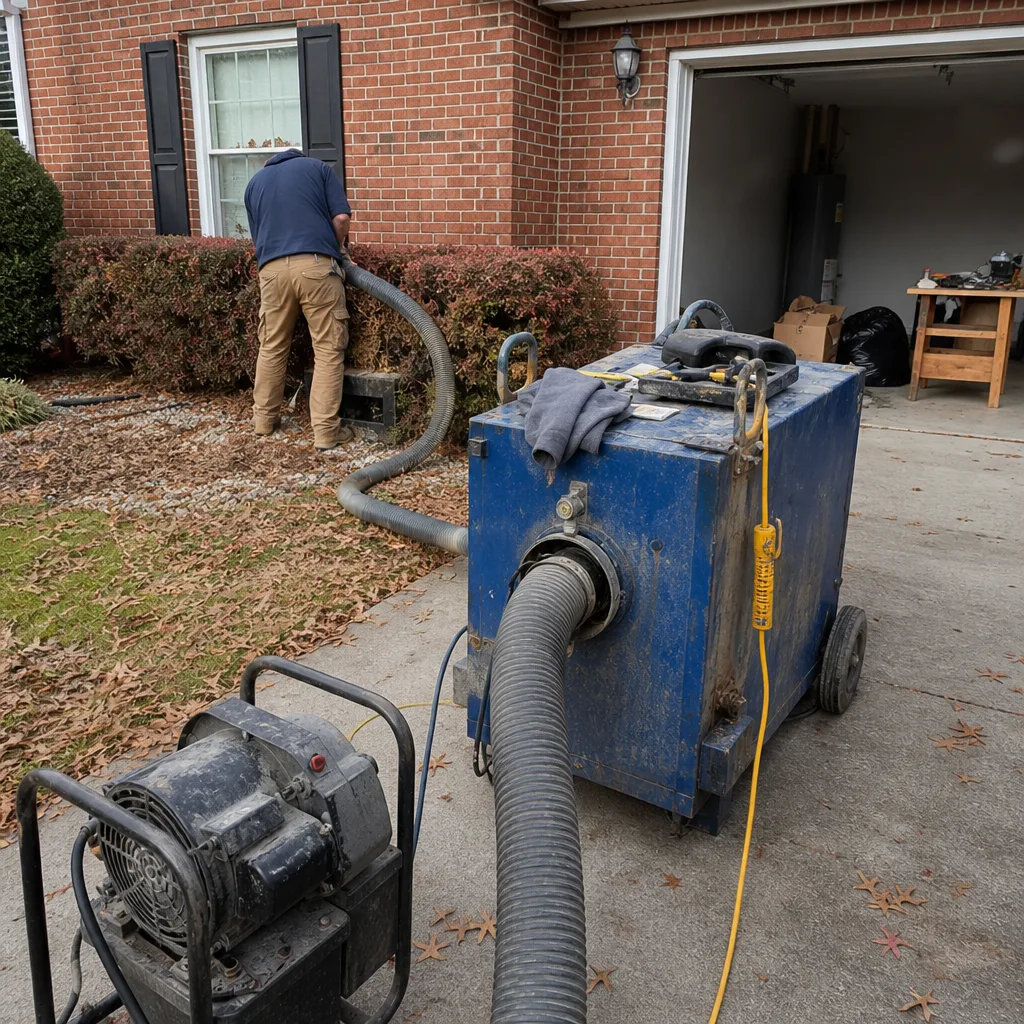
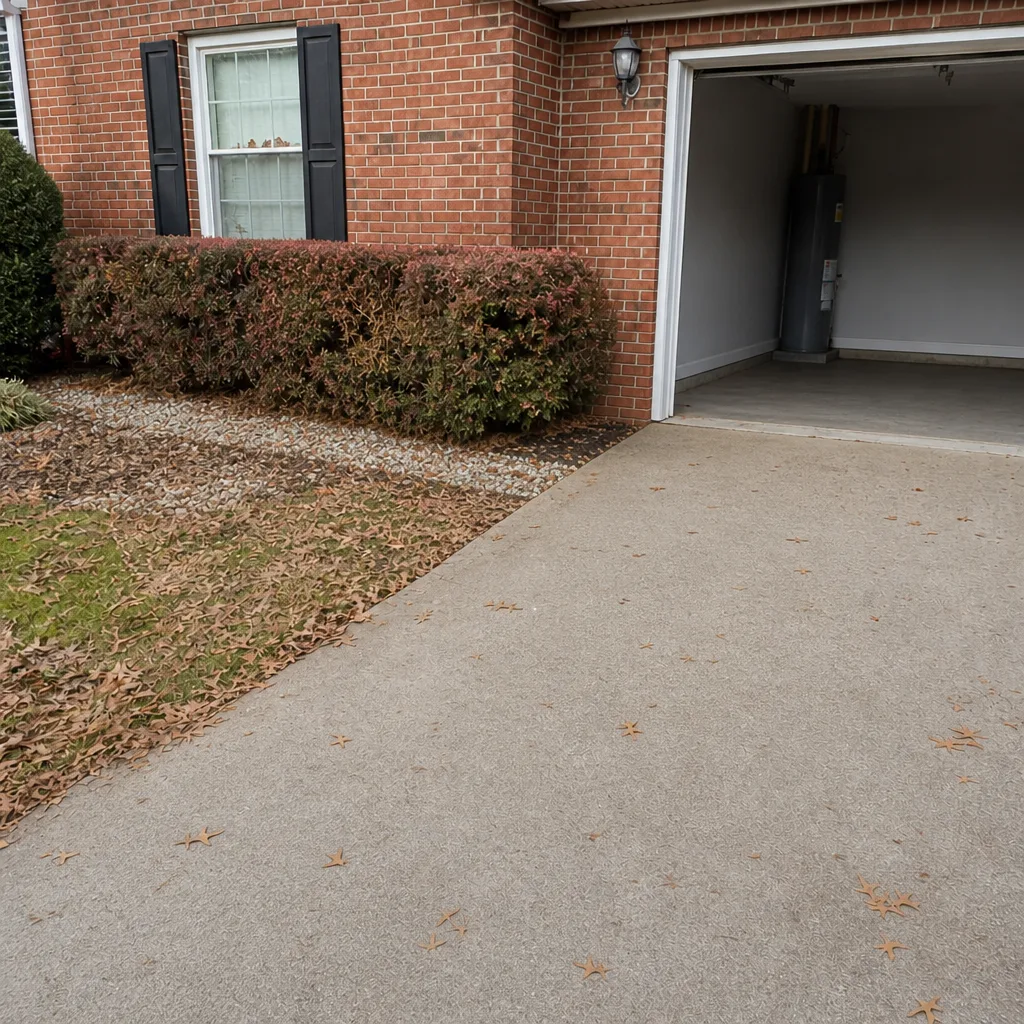
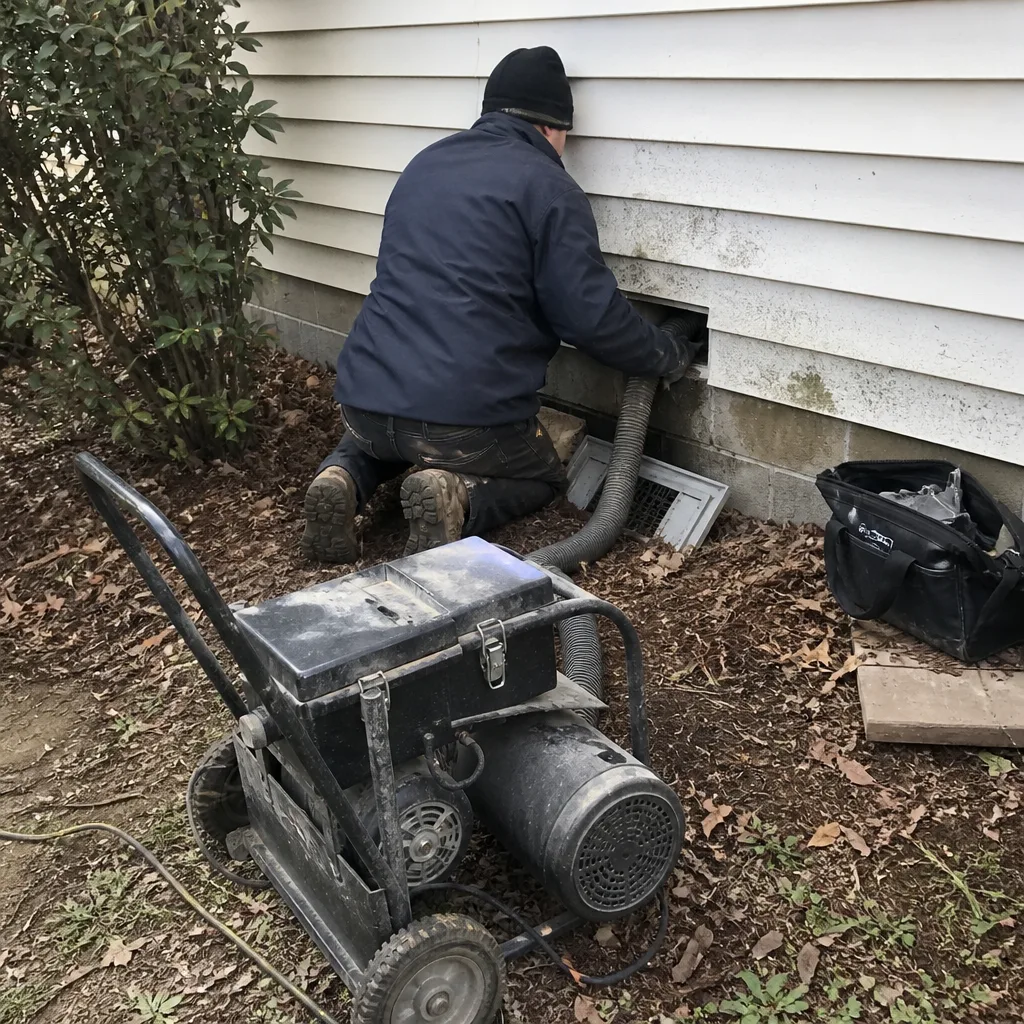
- Accepting an invoice without before-and-after images. If the company can’t show you the inside of your ducts before and after cleaning, you have no way to know what was done. Ask for the photos and keep them.
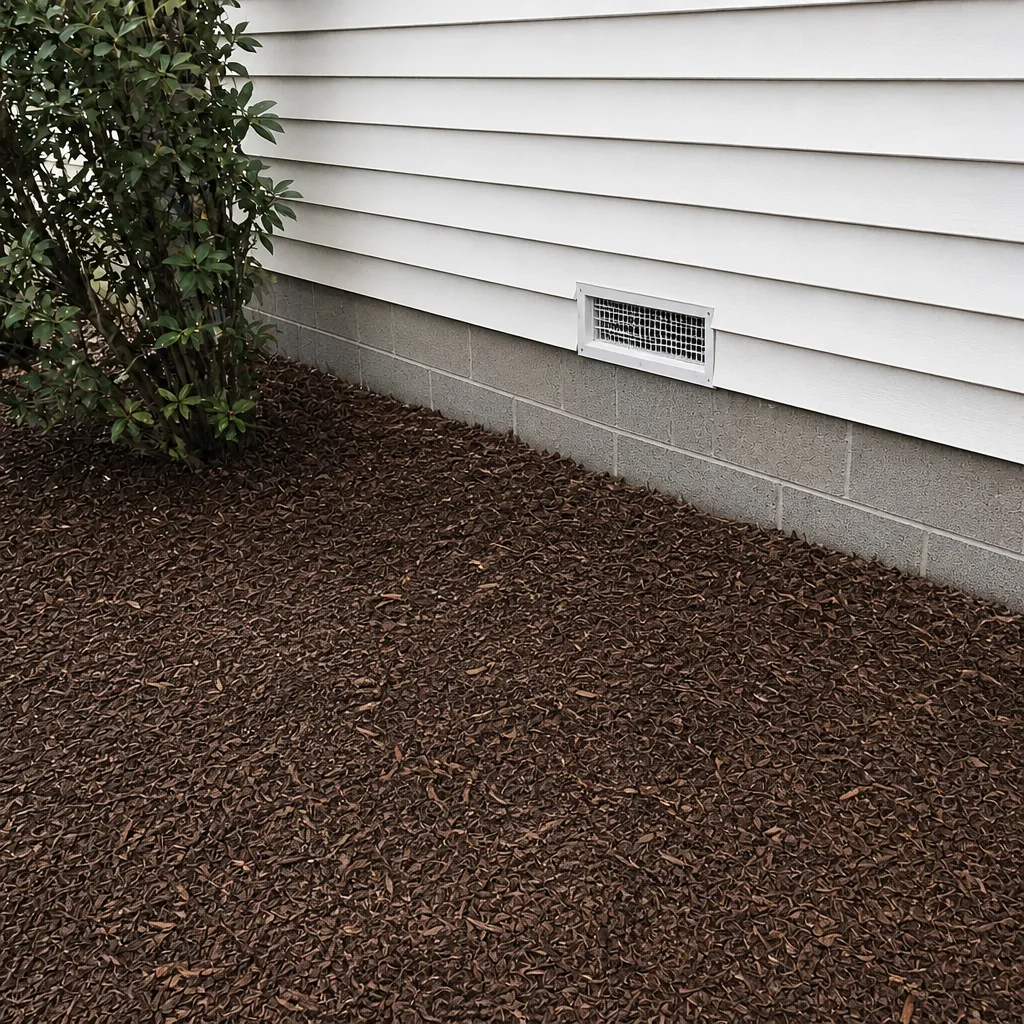
See the difference
 Before
 After
 Before
 After
 Before
 After
When to Call a Professional
Some duct jobs need a specialist to look at them before anything else happens. Call us if:
- You’ve noticed a persistent musty odor from the supply registers that doesn’t clear after changing the filter.
- You can see visible dust trails on the ceiling around supply registers, which usually points to a duct connection issue.
- Your dryer takes noticeably longer than it used to and the lint trap stays empty.
- You’re buying or selling a Concord home and the inspection report flags the duct system.
- You’ve had an HVAC replacement and want a camera pass through the connected ducts to confirm the connections are intact.
- You’re a property manager turning over a unit and need the duct and dryer vent documentation on file.
We clean, we clear, we repair, all in-house. Duct Cleaning Concord offers free estimates in Concord. Call (888) 687-3361. We answer 24/7. Fast dispatch from 7am to 7pm, Sunday through Friday.
Frequently Asked Questions
No. Standard duct cleaning in Concord doesn’t require a permit, and no Cabarrus County inspection is triggered by cleaning alone. A permit becomes necessary when the job crosses into modification: replacing duct sections, changing the layout, or opening a sealed plenum. If a company says you need a permit for cleaning, ask them what specifically they’re proposing, because the answer usually reveals that the job is bigger than cleaning. Call (888) 687-3361 for a free estimate on the cleaning itself.
Yes. Products that kill or inhibit microorganisms inside HVAC systems are treated as pesticides in North Carolina and must be EPA-registered and used according to their label. That means you’re entitled to see the product name and EPA registration number before it’s applied. You can also decline. If you only hired cleaning, cleaning is what should happen. Call (888) 687-3361 if you want to discuss a targeted application versus a whole-system one.
Established mold growth on duct surfaces moves the job into remediation territory, which is a separate license and protocol under North Carolina rules. A duct cleaning company that’s clear about its scope will stop, document the finding, and refer you to a licensed mold remediation contractor. What shouldn’t happen is a company fogging the system and calling it done. Call (888) 687-3361 and we’ll walk you through the inspection findings before recommending next steps.
Document the damage with photos, get a written statement if possible, notify the company in writing, and ask for their general liability insurance certificate. If they won’t address it, file a claim with their insurer. Cabarrus County Inspections gets involved if the damage triggers a code or permit issue. Call (888) 687-3361 if you want an independent assessment of the damage before you make a claim.
Yes, the HVAC replacement requires a mechanical permit through Cabarrus County, and the duct work tied to that replacement is within the permitted scope. That’s why getting the permit number and the inspection record matters, especially if you’re planning to sell your Concord home. Call (888) 687-3361 if you want a camera pass through the ducts to verify what was done.
Professional rotary brush and vacuum systems, not shop vacs. We use Rotobrush and Nikro equipment, and we bring Abatement Technologies containment to heavily soiled jobs. That’s commercial-grade equipment brought to your home, not a generalist with a long hose. Call (888) 687-3361 to schedule an estimate, and we’ll walk you through our equipment and our process before you commit to anything.
The Bottom Line
The permit line for duct work in Concord runs between cleaning and modification. Cleaning is maintenance. Modification is permitted work, and Cabarrus County Inspections is the authority that decides what that means for your specific job. Antimicrobials and sealants put you in a separate regulatory category that requires EPA registration, and you’re entitled to see the product before it goes into your ducts. Mold found on duct surfaces belongs to a separate license and protocol under North Carolina rules. If you’re selling a home, the permit record on prior HVAC work belongs in your due diligence. If a job goes wrong, documents win. That’s the whole framework. Duct Cleaning Concord is here to do the cleaning, the dryer vent clearing, and the duct repair honestly, on one written estimate, with before-and-after photos of your own ducts. Call (888) 687-3361 for a free estimate in Concord.
Written by the team at Duct Cleaning Concord, serving Concord since 2013.